The power of sensory processing in work
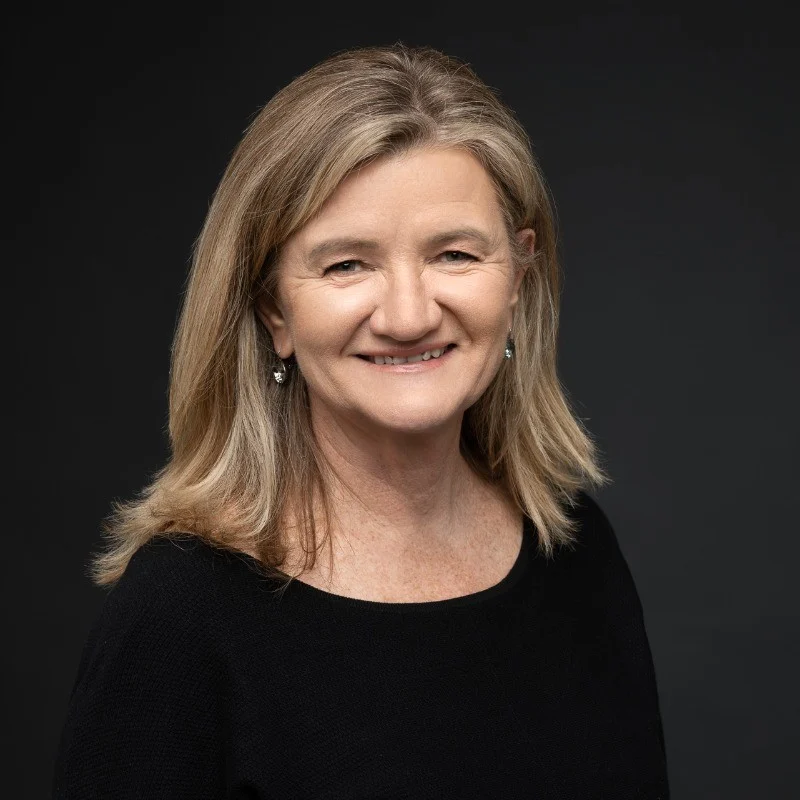
Dr. Annemarie Lombard
Founder | CEO, Sensory Intelligence Consulting
About this episode
Dr. Annemarie Lombard, CEO of Sensory Intelligence Consulting, joins Nic to explore how sensory thresholds shape well-being. Drawing on 30 years in OT, she details her Sensory Tree model, sensory-informed design, and why flexible hybrid work and outcome-based leadership prevent burnout.
Resources mentioned
- TOOLWorkplace adjustment passportA workplace adjustment passport (also known as a reasonable adjustment passport or disability passport) is a living, employee-owned document that records the equipment, environmental, or procedural adjustments an employee needs to work safely and effectively.
- TOOLSensory MatrixThe Sensory Matrix™ is a science-backed online self-assessment developed by Sensory Intelligence® Consulting that measures how your nervous system processes sensory input across seven senses, with practical tools and strategies to help you reduce stress and digital fatigue, improve focus, prevent burnout, and thrive at work and in life.
- BOOKSensory Intelligence Why it matters more than both IQ and EQSensory intelligence explains, in clear, layman's terms, how this works, helping you understand why you and others respond to sensory input the way you do. It then tells you how to modulate your senses to adapt to your environment and other people, or to change your environment to fit your sensory preferences.
Transcript
Nic (00:00.695)
Welcome to the Inclusive Shift, the podcast that where we explore what it really takes to build workplaces that embrace neurodiversity. I'm Nic Nagtzaam, and in each episode I sit down with neurodivergent professionals, leaders, and experts to hear their stories, challenges, and insights on creating inclusive workspaces.
Continues for 1 hr 7 min — read the full transcript
Nic (00:23.86)
Today on the Inclusive Shift, I'm joined by Dr. Annemarie Lombard, the founder and CEO of Sensory Intelligent Consulting. Annemarie is an occupational therapist with more than 30 years of experience working with neurodivergent individuals. She began her career supporting children with learning differences before expanding her work into leadership, workplace development, and adult learning.
She's the author of Sensory Intelligence, Why It Matters More Than IQ and EQ, and the creator of the concept Sensory Intelligence, a framework that helps individuals and organizations better understand how sensory processing affects behaviour, performance, and well-being.
Her work challenges a simple but powerful assumption. If we want to make people thrive at work, we need to design environments that actually work for human brains. Annemarie, welcome to the Inclusive Shift.
Annemarie Lombard (01:20.003)
Thank you, Nic. Lovely to be here. Lovely to share the stories that we both have to tell, I'm sure.
Nic (01:26.109)
Absolutely. Annemarie you've spent more than three decades working alongside neurodivergent individuals. What first drew you to this work?
Annemarie Lombard (01:36.515)
Nic, now that you say it like that, you make me feel very old. Look, I trained as an occupational therapist many, many moons ago. And obviously, in the occupational therapy world, it's all about understanding human beings and helping human beings. And it's typically in a rehabilitation space. So my journey took a few turns, but I very quickly, even when I was working in Namibia many years ago,
Nic (01:40.519)
Mm-hmm.
Annemarie Lombard (02:01.314)
got involved in a clinical practice where we were working with children with learning problems. At that stage, for instance, think ADHD and attention deficit disorders were more well known, but autism didn't exist at all at that particular stage. So I think it was just my work as an occupational therapist getting involved in that work. And then I was moving from Namibia to Cape Town, Los Angeles, and then back to Cape Town. So I had
many journeys around that. And the focus of the work that we do as occupational therapists is looking where humans are struggling. In my case, it was very much around children. Are they struggling? Why are they struggling? And what solutions can we use to actually help them to cope with life? So I think that's just my OT hat and my background and my qualifications, yes.
Nic (02:56.509)
Thank you so much for sharing. It it's it's definitely a unique space to work in and and you're right, autism hasn't been around for for that long really. I mean it was Asperger's back in the day and then they went, Well it's it's a lot bigger than Asperger's and it's really a a broader spectrum of of what's what we know what we know as autism today, which is quite significant.
Annemarie Lombard (03:25.134)
Of of course.
Nic (03:27.132)
So you started your career supporting children with learning differences. What did those early experiences teach you about how people interact with the world?
Annemarie Lombard (03:37.869)
Right, so going back to talking about autism, I do think probably the most pivotal insights that I've gained over all the years when I was still a clinical therapist and I was working predominantly with children was when I was working with autistic population. By the way, I loved working with them because the work that we could do from a sensory perspective was so extremely powerful. And I very quickly realized that how environments
in that particular group of children at the time were so critical. I mean, my sessions were brilliant and very constructive and very therapeutic when I set up the environment prior to my sessions. When I did not do that, when I was either too busy or I was getting distracted or I didn't have time to prep and I brought these kids into a bit of an unstructured, chaotic environment, all hell literally broke loose. And I had such...
poor sessions with not really getting to the goals that I was wanting to achieve. So I think at a very, very early stage, I was seeing the huge impact that the environment can have on someone with in the autism space on their brains and how difficult it was for them to engage with me, to engage with any form of activity. And it was just not therapeutic. And
So from an occupational therapy point of view, in my world and in my view, environments can be therapeutic and can be productive. And I mean, I could see it happening in front of my face again and again and again. When it failed, always, 99 % of the time, could bring it back to the environment. And when it succeeded, I knew the environment was set up and I was structuring the session so much better. So I'm very grateful for having to learn
so early in my career about the autism space and what they need and what they require because it was so integral into what is happening around.
Nic (05:45.655)
I'm a curious here, so
one of my boys has autism. he's got a PDA profile attached to his, which can be challenging at times. but what I find with him is he's more than happy to to sit and work in a in a clean environment, but he's less inclined to clean up after himself, and would much rather live in a a world of chaos that is his own room. and
it continually starts to creep out to the rest of the house. do do you often see that occur with with as a common sort of occurrence?
Annemarie Lombard (06:27.266)
Yeah.
Annemarie Lombard (06:30.72)
It's an interesting question that you are asking and immediately I'm going to transitions. Remember transitioning, particularly in the, in the autism world is extremely difficult because transition literally could mean I'm walking from my bedroom to my bathroom. That's a transition. That's my environment is changing. My body is changing. My brain needs to adapt. So any form of transitioning, which is obviously the little subsets of change are typically very difficult for.
your autism person to deal with because it kind of puts your brain in a discomfort space because what is happening now is something different is happening. So I think it immediately goes back to the transitioning element which is very critical and for instance we find transitions are hard for a lot of people but particularly in the neurodiverse space of course.
But then I also could mean if there's a matter of sometimes they create a bit of chaos and I see this with so many of my clients. They create chaos, but that chaos is not conducive for them for thinking and processing of information. But it's as if they don't always know how to regain control and organization again. I think, you know, decluttering and organizational skills is something.
we kind of take for granted, isn't it? That we just think people should have it. But it's not actually. The more I think disrupted or all over the place your brain is and your environment's interaction with your senses in your brain is, I think the harder it is for that group of people to create that order, to create, you know, just routine and putting it all together. While routine and order and structure
and clean and decluttering is so critical for them. It's sometimes very hard for them to obtain that.
Nic (08:26.099)
I c very, very couldn't agree it more if I said it myself. Like it routine is is fantastic and when a routine is is in place for my son it works wonderfully. but as soon as school holidays occur or the routine is broken, chaos ensues. So, you know, it would be it could be that
say our morning routine is we'll have breakfast and we'll get dressed for the day, come school holidays, it's he might have breakfast, but most of the time he will just flick on a T V or play a video game for hours and then he'll go, I'm hungry, I need to eat something So it's it's like, hey buddy
Why don't we do this first as a you know, a s basic step of getting ready for the day and then we do this activity. but it's for me, yeah. No, sorry, go for it.
Annemarie Lombard (09:23.926)
I definitely it's hard. Yeah, I think for those kind of kids, it's definitely important to build and to create a holiday routine as well. It's obviously different to when they are at school, but a different routine is really, really important. I remember, I can't tell you how many times we sat through, if a family would go on a holiday and then helping them to plan, also then to prep them when there's gonna be change because that in itself also.
throws the nervous system into turmoil and unexpected and surprises, which often creates a lot of anxiety and fear and stress for them. then obviously our kids who are younger then would over respond as a result.
Nic (10:04.465)
No, so true. So then we've we've touched on obviously the work that you've done in in the past around working with children. At what point did you realise that there were sensory patterns that weren't just affecting children but also adults and workplaces as well?
Annemarie Lombard (10:24.194)
Yeah. Nic, that's interesting. I'm going to give you the elevated version. It was very, very much a personal journey for me. I had the privilege to move and travel to the States. So I worked in a sensory integration clinic in Los Angeles. And by the way, that was the first time that I was introduced to the autistic population as a group. I didn't work with autism before that because it didn't exist. Literally it didn't exist. And that was in the nineties.
But then when I worked in Los Angeles, I was really bombarded with all of these children with autism problems. And I was working in a clinic where they are absolutely at the forefront of new research and all the big names in our field was involved there. So when I returned back to South Africa, firstly, I couldn't find my feet. It was just as if my body was in two continents. Half of me was still in California and the States and the other half was back in Cape Town, South Africa.
couldn't really function. And because of my experience, I was actually asked to do training for the occupational therapists in South Africa, who actually we take them on a sensory integration certification course. And there's always this part of how does the brain modulate and regulate the senses, which is one subset of the work that we train in our area that I just.
fell drawn to, I could understand it and I then became the Sensory Modulation Guru in that particular field and then I started to educate and train other professionals. And I think that was a personal light bulb that was switched on for me. How do I use this to expand the work that I was doing because I found my niche in really educating and empowering. And when I look back, I also could see I never used to work with a child in isolation.
I would always work with the child as well as the parent, kind of slightly even a bit more of a focus on the parent because my core belief is if you want to change a child's life, you empower the parent, which then led me into, then how can I use the skills that I have, but then start to use it in a empowering education training context? And the obvious thing for me was let me start to do parenting workshops.
Annemarie Lombard (12:43.235)
So I started to do parenting workshops because those were my people. They were the people that I was engaging with on a regular basis. And then I think probably the most pivotal moment was, and then we always use an assessment. So, okay, if now I've assessed all of these children, how do I assess the adult? How do I look and look at the same thing with the adult? And over the years, the parent would always say, I'm exactly like my child. That was, for instance, constant.
If you assess a child, the parent always come, I've had similar problems or I'm similar with my behavior. So those repetitive symptoms or behaviors was very, very common. So it was just the obvious thing for me. I started to work with parents, then I got into adult profiling tools. And then obviously the first, my first guinea pig was myself. And I remember literally doing my own sensory profile for the first time. And I was
blown away by the insights that I personally acquired from that. I share this often and I'm happy to share it here as well. I think if I haven't done it at that stage, I probably would have divorced my husband by now. 35 years later, we're together and I promise you, when I could dig down and see, when I could dig a little bit deeper and see, we are all wired so differently. Our brains operate differently. And if we can unlock, understand and use that.
We suddenly have so much more compassion. We suddenly have so much more knowledge about, this is why that person is doing that. He's not trying to just irritate me or be annoying. It's really understanding behavior from where it comes from. We all do different things because our brains are wired differently. We've got different needs and it kind of surfaces individually.
It was a huge personal revelation for me and I kind of felt very guilty for a long time. How in the world could I have work with this framework and this theory and this practice for so long with children? I mean, that was 15 years, but I haven't actually translated that back into adults. So, you know, I made the shift and I decided the work that I've done with kids, the same thing applies to adults and let me shift into the adult world. And that was literally
Annemarie Lombard (15:05.711)
26 years ago when I started to do that. And I think people at that stage thought I was crazy. What are you going on about? But it was such a natural shift for me because there was so much personal learning and revelation in the process.
Nic (15:21.321)
I'm I'm curious, when you completed your sensory profile what what came out of that? did you identify that you couldn't work in loud environments or w was it was there something that kind of really stood out for you?
Annemarie Lombard (15:39.384)
Absolutely. And I also am feeling a little bit, this is kind of quite personal, but I got very bored with clinical practice work because it was kind of, follow a bit of a recipe and you see the same type of problems and you solve it the same kind of way. And I was getting so bored of that. So I suddenly could understand my boredom and I just didn't want to do clinical practice anymore because I needed variation. needed change. And when I actually did my own profile and I'm
For instance, we've got a whole scoring range and I've designed a test after my PhD consecutively around your scoring and it goes from minus 60 to plus 60 and I'm a plus 32, which is really, really high thresholds. And I was like, wow, now suddenly I understand why I got so bored in clinical practice. Why I couldn't do the same thing anymore. Where I do need variety, I need different stimulation, I need different environments. So I think a key thing was for me,
Why did my work environment at the time was so draining for me? And I was very adamant about doing a great job. I'm a little bit of a stickler for you either do something well, perfect, or you don't do it. So I was really torn between not wanting to be there anymore, but I needed to do the best that I could. making that career shift was really, really critical for me. And then, and I think the other one is just really just being more compassionate towards my husband. I looked at him and I thought,
Okay, he is not trying to just be irritable and annoying. I could understand how his behavior was also tied to his sensory thresholds. And when I wrote my book, the introduction to my book is literally an experience that I've had with my husband. And I explain, and it was one of those pivotal moments like, wow, I understand behavior so much better now. So those were the two ones that stood out for me. Yeah.
There's many nuances that I actually developed afterwards, but those were the two big things at the time.
Nic (17:45.118)
It sounds like I should have a bit of a go myself. I I mean I definitely have a a s good understanding of my my sort of sensory issues. for me I definitely can't work in a loud environment. I certainly need variety myself as well. hence working full-time and playing with a podcast at the same time. Because it it gives me that stimulation that I may not get necessarily in in a a full-time job.
But yeah, it's it's I'm definitely curious to see how it would play out.
Annemarie Lombard (18:21.303)
Yeah, and obviously, I know I hear you call it your sensory issues. And I think being a therapist for so long, it took me a long time to learn to reframe how we talk about sensory behaviors. It's not a sensory issue. It's your and so it's literally how your brain is wired. What are your sensory thresholds and how does that determine your sensory identity? Because there's no right or wrong. There is no right or wrong.
these extremes, these outliers, and then what does that mean for your life? So big, big, big thing for me. And because what actually happened with me, which I think was brilliant, I used to work in kind of the medical model, doing more rehab, retraining kind of work. And then I moved into the normal model with healthy people.
helping them to understand more about themselves. So obviously I came totally from the neurodiversity world. Then I took the sensory elements and made it mainstream. Let's all just understand how we are wired and understand why certain things work for us, why certain environments doesn't work for us. When do we get annoyed? When do we get irritated? And it feels like it's a little bit of my life that has gone full circle. I came from the neurodiversity world.
then took sensory processing, made it more mainstream, let's all look at how we can learn from us just on a human behavior point of view. And then it's kind of circled back a little bit into the neurodiversity space because that's always been my understanding and my framework. And now it's so great to see that there's so much more awareness to neurodiversity. People are talking about it. It's getting the attention and the time that it deserves. But as I say, so we also try to look at
What does this mean for you as an individual? There's no right or wrong. This is just how you are wired. And how do we understand that? And how do we use it to your benefit?
Nic (20:27.168)
No, it's so true and and and thank you for correcting me as well. Like it well not correcting but helping me reframe. you it it's definitely not a sort of an issue, but I guess it's it's just the w you're right, the way that my brain works is I can't handle being in loud environments 'cause for me it's overly distracting. and it it takes away from my ability to focus. to being able to work no.
Annemarie Lombard (20:34.51)
Yes.
Annemarie Lombard (20:52.355)
And that's not a sense. Yes, it's not a sense. So it's just about reframing this. I think it's reframing this and then embracing it again, because yes, no, you can't work in a very overloaded, noisy, busy environment. But I'm going to make an assumption here. I'm sure if you listen back to these podcasts, audio, you probably have got the capacity to slice it up into the perfect little fragments because you can hear.
All the nuances within the discussion. I'm just using that as an example. I'm, you know, so what, what we call sometimes where your brain gets overloaded and irritated also sometimes become your superpower. And that's how I help people to reframe it because you're not going to change that. That's how you are wired. That's who you are. yes, noisy environments is going to overload you. But then again, if you need to be attuned and in the moment and really hear what other people.
Nic (21:35.448)
Mm.
Annemarie Lombard (21:51.92)
can't hear, you can do that. So turn, it's not a sensory problem, but it's a sensory threshold. What's part of your sensory identity and how do you turn that into your superpower? That has been a big part of the work that I've started to do and wanting to do. So neurodiverse individuals, absolutely, we need to be a lot more considerate, but all of us can benefit from this insight and the awareness. And we want to.
get people on the neurodiverse spectrum to not say, I'm neurodiverse X, Y, and Z. You we want to be open and acknowledging the fact that all humans, regardless of where we are on this continuum of what we call life and behavior, we are all different. We are all unique. Thank goodness we are. How boring would it be if we were all the same? And how can we design
Nic (22:41.398)
Mm-hmm.
Annemarie Lombard (22:44.383)
space activity environment so that it actually feeds into the needs of most people and people might say it's impossible. No, it's not. And we're never going to get the perfect environment, which we anyway don't want to do. We don't want to overprotect your brain. don't want to put you in, for instance, for you, if you are noise sensitive, we don't want to put you in a soundproof room and you never hear any noise. That would be the worst thing ever because the brain is neuroplastic. The brain constantly needs to
be exposed to these nuances of sensory stimulation within your environment. But if we can know that, how can we maximize you as an individual considering your sensory thresholds and your sensory identity? Because if we do, I mean, you're going to flourish. You're going to do great work. You're going to be happy. You're going to be healthy. You're going to be focused. You're going to be in the flow in the moment. I mean, for me, it's often like
How come it's not a no-brainer for everyone? It is for me, for sure.
Nic (23:45.854)
I I agree. So then h how does sensory processing influence the way we work and communicate and respond to things like stress in our workplaces?
Annemarie Lombard (23:57.167)
Yeah, good question. Good question. The research are very clear. I've also been mad enough to write a book and to do a PhD. So I had to really dig into all the data and I'm still busy with research. I probably will be for, I don't know, how many more years to come. But the research is clear on this. People of low thresholds, in other words, that are more sensory sensitive and sensory avoiding are more prone to stress related illnesses. They've got...
higher degree of stress, they've got a higher degree of anxiety, depression, burnout, as well as work-related stress. And it makes perfect sense because if you have low threshold, your nervous system absorbs more information. Your nervous system process more information, more intensely, more frequently. Now remember your superpowers, you you're very in tune, you know what goes on, you can do excellent detail, dot the I's, crosses the T's.
But then yes, at the other end, you are more prone to be overwhelmed and overloaded by your environment. So your level of resilience is reduced because your nervous system absorbs more information more frequently and more intently. And we see that in all of the data. So stress management, it's such a kind of even hate the word, but it's so real and so relevant. Stress management is important for all of us, but we definitely know.
That group of people with low thresholds are more prone to stress. They're more prone to be impacted by stress. And for instance, we've looked at sampling of more than nearly 5,000 of our data sets. And 30 % of the general population, let's say the general healthy population, is more sensory sensitive and they've got low thresholds. But in the neurodiversity and the mental health spaces,
47 % of that group are more sensory sensitive, are more impacted by their environment, need to actually make more environmental adaptations or accommodations so that they don't get overwhelmed. So the two really goes hand in hand. And when your brain is in that stress mode, then it's like, I always call it crisis management, then we have to do crisis management. So there's so much to be said about.
Annemarie Lombard (26:20.756)
Know where your triggers are. Know what your thresholds are and then be working at health promotion point of view. Prevent the stress from happening. Prevent the anxiety from boiling over. Prevent the burnout from happening because the recovery is always longer, it's harder and it's just more expensive. So there's a lot to be said about having that awareness and the mindfulness of.
what is happening in my nervous system? How am I impacted by my environment and how can I control for that?
Nic (26:58.897)
Mm no, that's very, very true. And obviously the individual themselves has has so much of a responsibility or capability of monitoring their own triggers and being aware of those, if they have the ability to be aware of them, 'cause not everyone is fully aware of their triggers and and abilities. But
What responsibilities do organizations have in setting up those workspaces to prevent those types of activities occurring?
Annemarie Lombard (27:32.656)
You know, obviously in my opinion, it's another no brainer conversation for me. If you're a leader of a big organization and you've got people working for you, don't you want to get maximum productivity out of them? Is that not your goal? I mean, every leader would tell you we are here to run a business, to make money and to save time. Well, so it's all about the efficiency of human beings. All right. So that's what business is all about. So if you...
If that's your objective as a business leader, then you can't just put a lot of people into one space and expect them to just work and do their thing. I often, I can be quite cheeky, so I would often look at a leader and say, tell me, where do you work? And why do you work here? They often can do it for themselves, but they don't think wider and longer. How do we do it for our staff? Because it is about creating workspaces.
that is conducive for humans to deliver their best quality of work. And it doesn't need to be major and fancy. It is about, I believe some of the key things is flexibility. And really, the world has moved on. We are now working with younger generations, people that want flexibility. So if you can have people to create a flexible workforce, then you know create it. I also say.
What have we learned during the COVID pandemic? People can work flexibly from home. Man, this is a dream for people who are sensory sensitive. This is a dream for your neurodiverse group of people because they've got more control over their environment. There's obviously not, it's not always rosy and best, but flexibility means that people can work against, you know, to their own rhythms and to their own needs. Leaders don't want to go there because
Some of them embrace this and do it really well, and some of them don't know how to manage workforces around output versus time management. If people need to clock in and whatever, certain workplaces, that is still necessary. But I think leadership also needs to move, like, how do we lead people, or how do we manage people according to their output, not according to the time that they spend, according to their success rates?
Annemarie Lombard (29:52.944)
And then I think space again, if we have people sharing space, how can we accommodate them within that shared space? You know, one person might have to sit in a corner, you know, against next to a plant and a divider. Another person might need headsets. Another person actually might want to sit in the middle of a whole hustle and bustle of a group. There's so many variations to this. And I think maybe
I've seen this probably where it was at its worst. did my PhD in call centers, heaven knows why. Dreadful work environment where literally sometimes hundreds and thousands of people are sharing one particular space. And then they're on calls. They need to make calls. They need to actually either deliver a sales or a service call or collect, do debt collection. And then they're working in these horrendous environments, I think.
My shift into the importance of workspace became very entrenched when I was doing my PhD because I was trying to look at if we assess people and what job should we put them in so that they flourish. That was my approach. But then I realized very quickly the job type or the task that we give them is only one part of it. If we give someone the perfect job type or the job task or the job action.
but they're sitting in a noisy, overloaded, overstimulating type of environment, they're not going to succeed anyway. So it's not just job type. It's also environment. What is that environment set up like? And then the other one is, you know, what is the people dynamic and the leadership styles, management styles? People are, I love to work with people and behavior is fascinating, but you know, we need to consider the fact that
Different people might need different things and you still can have structure within, flexible structure within a particular workspace. Hope I've answered your question.
Nic (32:02.45)
No you have, yeah, you certainly have. I guess
Le leading in in there then, what are some sim simple sensory adjustments that leaders could make to make everyone's s sort of workplace environment, you know, better?
Annemarie Lombard (32:21.264)
Yeah. So the one thing that I've mentioned is definitely flexible working. I'll, you know, just what does the environment look like? Is there enough air? Is there enough sunlight? Is there enough space? You know, you know, because we do know natural lighting is going to facilitate better productivity and increases productivity by 30 % as opposed to fluorescent lighting. So definitely the right lighting. Can people move around? Can they have
Nic (32:26.686)
Yeah.
Annemarie Lombard (32:50.576)
Some people love hot seating where they can be flexible and they can sit on their own seat every day. But there are people that want to have the same seat every time. Where do they sit? Can they use headsets? Should they have one ear headset or a two ear headset? Can people have choice of the headsets that they use? I'm now referring back to in the call center space, people usually just get headsets. They don't have a choice. So choose, let me choose my headset. And then also let me choose my space.
You know, can I change my computer screen? Can I change the color of my background versus the contrast that I'm using on a device, on a screen device? So I think really that level of choice is important. And I think the workplace of today, and I do think it's useful to bring people back to work because unfortunately the one bad thing about homeworking is people get isolated and they get lonely.
and they don't get enough social interaction. It's harder, admittedly, it's much harder to build culture in teams when people stay in their work from home. So bringing people back to the office can be very, very, very helpful, but I do think they should have that flexibility and then set up the workspace from a design and an architecture point of view to be as sensory informed as possible. But then I also believe sensory informed is
Nic (34:15.336)
Mm-hmm.
Annemarie Lombard (34:17.764)
Are we considering the light? Are we considering the air conditioning? Are we considering the space? Do people, for instance, have standing desks? You're anyway going to set up that space. Just do it more mindfully. you know, the cost is sometimes it's not even costing you more. Do people have the right chairs? If I need to sit on a chair the whole day, I need to have a good chair. So there's sensory informed design. And then the elevated version is sensory inclusive design. This person is more noise sensitive.
We are the quieter spots. This person is more visual seeking. They can be sitting in front where there's more variation or color that's involved. So, and that's easy to do. We often do that in the work that we do. But then the other thing is, does a workspace have, you know, a cafeteria with healthy food options? Do they have focus rooms? Do they have good creative spaces where people can sit and brainstorm?
Because if I have to go sit in a brainstorming space where the walls are dark and grey, you know, and there's not enough light, I'm definitely not going to produce my best cognitive thinking in that process. So activity-based working, I'm quite a fan of that because it means we can bring in different elements within a workspace and then people can navigate to that as they see fit. And then the other thing is do people bring in...
wellness incentives or self-development or training and development incentives for their staff. You know, there's a lot more parameters to it, but allowing for people to bring in their individual needs and then just making the space to be conducive, not pretty. I'm going to use this example. I once was involved in a sensory audit for a space. It was a big call center for coke.
And then the designers wanted to paint the walls red. This was a call center that was collecting debt. It was 500 people sharing a space. I'm like, you cannot paint the walls red. These people are going to kill each other at the end of the day. Red is an aggressive color. So red could be brought in as just little feature elements on, you know, a banner here or something there. So.
Annemarie Lombard (36:38.338)
We need to stop looking at stuff just through an aesthetic lens and it's also your aesthetic lens. I remember working once for a big bank. There were I think 120 people in that group. The leader of that team had the highest threshold of all of them. He said, okay, we're going to redesign the space. We're taking away all the dividers. And I'm like, you cannot take away all the dividers, all of the dividers being taken away.
was his entry needs because he wanted to see everyone. But I could show him that there was about 35 % of his employees that were more sensitive. And I said, those people actually need a divider so that they can work more distraction free. So I think we always make these assumptions. What worked for me must work for everyone else. And it's just not true.
Nic (37:29.644)
No, it's so true. I think the for me it's you know, can we introduce things like
passports where an individual can kind of specify, hey, here are my sensory needs or here are my personal adjustments that I need to make to make me more productive in my workplace. and you know that's been quite a big push with through a lot of organizations or advocation groups here in Australia and I dare say across the world as well. but the
I loved also what you made mention there of having the natural light. For me it it also reminds me that, you know, having that natural light kind of it helps you with your circadian rhythm as well. So, you know, it's nice and bright in the morning towards the afternoon it starts to get darker, which means you you know, it's indicating for you to go, okay, it's time to start winding up for the day, it's time to work towards going home.
less of a a good thing when it comes to daylight savings here in Australia because come daylight savings it's still light at nine AM or nine PM I should say. Which makes it a little bit challenging. but during the winter months it it's perfect because it's like, okay, it's quite dark now. It's time to head home. which
Annemarie Lombard (38:48.453)
Yeah.
Annemarie Lombard (38:52.347)
Yeah, it's amazing how the human brain is impacted by everything that goes on around us. And there are ways and means that we can subtly change that without spending time, effort, energy or money.
Nic (39:05.768)
Yeah, no, that's very, very true. there human centred design for for workplaces is a a huge thing. and it's something that I'm hoping is going to start to gain more traction over time as well.
Annemarie Lombard (39:23.825)
Absolutely, absolutely. As I've mentioned, I was on this conference in Amsterdam two weeks ago. We were 150 people. I felt very at home. They were all these out of the box thinkers, people in the architecture and the design space. And talking about, you know, we shouldn't just design space from a visual point of view for aesthetics. We have to consider all of the ranges of the sensory systems and then design for people for health and well-being for who are the end users. Can we design for
the nervous system in general, at least let's start there. And then can we design for different nervous systems? So that's sensory informed versus sensory inclusive. But it's a very important conversation to go through because it's all about making people work better. And that is, it's the common objective, isn't it?
Nic (40:12.806)
No, very, very true. Very true. Annemarie you made mention, through your response just before, the return to work. and the policies around return to work. So obviously, during the pandemic a lot of organizations moved towards that flexible working or working most, if not all, of your time from home. and as we're starting to see now, a lot of organizations are starting to shift more towards
Trying to have people back majority of the time. but obviously for those that are neurodivergent or those that do have sensory processing or sensory is not issues. sensory needs needs. how
Annemarie Lombard (40:58.383)
Needs, needs.
Yeah.
Nic (41:05.128)
How do we go about ensuring that, you know, obviously the flexibility is one one element there, and in ensuring that we still have that flexibility, but making organizations aware that that's still something that needs to continue beyond, you know, the last sort of six years?
Annemarie Lombard (41:24.261)
Yeah. When I hear organizations are doing a full RTO, return to office in full, I'm very sad because then I think, come on, man. We've learned so much during COVID. Let's, and that makes sense for me, let's take what we've learned from COVID and continue to implement that. But then also see what was the negatives that we've learned from the COVID pandemic and people working from home. So I just want to be clear on that.
We don't support exclusivity for either. I don't think people should just be stuck at the office, but I also don't think people should just work at home because there's pros and cons to both of them. So I really do think in this middle space where there's flexibility and hybrid, that's the way to do it. But then again, within this flexibility hybrid space, it's still extremely nuanced. So I will give you an example.
If you have workers or employees whose neurodiverse or have particular sensory needs, I'll give you an example. So they might, this is just an example. So they might actually come to the office on Tuesday, Wednesday, but then Monday, Thursday and Friday, they will work from home versus those people who actually want to be at the office. They only need to work from home one day and four days.
they can be back in the office. Yes, I think it does create a bit of a scheduling issue, but hey, that's what we've got technology and AI for. Let's get AI and technology to solve this problem for us. Because if scheduling is a problem, that's an easier problem to solve than poor productivity or absenteeism or, you know, or attrition or presenteeism. It's much harder to solve those problems. So I think that's the key thing that we need to work with a hybrid flexible model.
And you will see, for instance, typically in the IT space, they are a lot more around flexibility and hybrid. And then versus if you're in a retail space, some some employee groups just won't fit for them. They need to be back in the office every day because it's client facing. I'm not talking about those. That's different. I'm talking about typically your knowledge bases or where there is capacity for people to actually create that hybrid space. So I think hybrid is the ideal.
Annemarie Lombard (43:48.615)
But they do considering that if people stay at home, they get very lonely and people do get depressed and it's harder to maintain the culture when people are from home. I think that's what we need to do. But bringing everyone just right back to the office, I think often that conversation is around retail space.
Nic (43:58.286)
Hmm.
Annemarie Lombard (44:09.646)
So, you know, it's a matter of they've got all of this retail space, it's sitting empty and they got to do something with it. So that's the wrong reason for solving a particular problem. I think it's a problem to be solved, but isn't there another way that one could solve that problem? So I really think flexible workspaces, if any employee, employer today is not embracing flexible working spaces.
I think that's what the younger generation want and that's how definitely you're neurodiverse group of people are going to work so much better. So for me it's another no-brainer. We've got to do it. Yes, it's created problems, but we've just got to figure out how to deal with that. I don't have all the solutions because I'm not workplace optimization in that scheduling business and I'm not planning to move there either, but I think it's a good problem to be able to solve.
Nic (45:04.641)
Yeah, no look I think you're right. flexible and hybrid is probably the the best way to go.
It's it's an it's a unique situation. You know, everyone does have their their own sort of needs and and th they need to be worked around. and if we if we can accommodate and enable n our knowledge work office workers to be able to do that, that's wonderful. I think where where a lot of organizations are kind of forcing that return to work full time
is the the level of trust I think in the employees as well. because
It it goes back to what you were saying before around managing outcomes as opposed to managing time and people sitting there and at their desk because that then, you know, comes back to presenteism. They're sitting at their desk, but are they actually delivering for me as opposed to they're not at their desk but I'm actually getting an outcome, so which one's going to be better for the organization going forward?
Annemarie Lombard (46:16.132)
Absolutely. And listen, don't get me wrong, there's accountability both sides, you know. So yes, I believe an employer should have the accountability to create and to produce and to provide as much flexible working options and accommodations as possible because it will benefit his or her employees and they will work better. But for the same token, an employee also must hold accountable for their own time management, for their own discipline.
So I wouldn't blame an employer if they bring groups of people back into the office because people are non-compliant or they're not producing or they're not effective. Sorry, because I wouldn't expect any employer to be able to tolerate that either. that's certainly the truth. think, I always say adults in the workplace are adults. They're not kids anymore. They should be treated like adults, but they should also show up as adults. And maybe I've got a little bit of a...
cutthroat approach to that. think it goes both ways. We need to step up, we need to adult and we need to take ownership, discipline and responsibility. You know, I'm also a business owner and we're a small team and we're a remote team. So I've also learned in our team, someone who's not extremely self-disciplined and self-guided and self-directed fail in our team because we do not micromanage.
That's what we expect from people who join our team. it also, I think there's general rules, but then, you know, I think it will differ from organization to organization and industry to industry. But I do think leaders should just ask the people that work for them. I think sometimes we think we have to get all the answers from someone else. If you're a leader and you've got an organization of people.
whether it's 20, 100, 500, 2000 that work for you, ask them what do you want? How can we make your work better? Yes, and you will, but give people some autonomy. And I'm always interested what amazing ideas people come up with if you just ask them.
Nic (48:28.337)
No, it's that's very true. I'm I'm I'd be very interested to see or understand if if leaders are i whether it's a knowledge issue on on them not knowing w how to potentially ask or what to ask or whether it's a a lack of understanding of
what they can and can't do as leaders within an organization as well. Because a lot of a lot of obviously executive leaders may know a lot more, but when you start to step down towards that middle middle management, it becomes a little bit a little bit more grey. and there's there's less of an understanding on potentially even how to support an individual that is neurodivergent or that has sensory needs as well.
Annemarie Lombard (49:16.541)
Yeah, absolutely, absolutely. But I can certainly understand that and it can become quite disjointed and if there's a wide range or a big group of neurodivergent people within an organization. But I think with the right dialogue and the right discussions, one can really do it well. And it's not about building a workplace for 2000 people. for example, an organization have 2000 employees.
It's not about building for 2000, it's building for pockets. It's building for particular groups. And it's just about flexibility and variation and choice. And if you apply those three rules, everyone will have some sort of a place somewhere. And then I love to do a deep dive into teams who work together. And then within that team, help them to understand themselves and their team leaders and their team members. And then it also is very enriching for the team to understand.
You know, we work of a sentry tree as an analogy. Who's a root? Who are all the sentry avoiders? Who are the leaves? Who are all the sentry seekers? Who are all the trunks? are the neutrals? What does that mean? How does that play out in our team dynamic? How does it play out in our communication? You know, who do I need to send an email to? But who can I just go and have a face-to-face quick, you know, spur of the moment conversation with? It's quite fundamental and life-changing if we understand.
How do I engage with my team in the best possible way to get the best possible result? Yeah, we want harmony. We don't want conflict and issues and it is possible.
Nic (50:52.6)
No, it's so true. I think for for me, as I've I come to learn how how I like to operate more and more, you know, I I begin to adapt it the the way that I lead my my team as well. so for example, recently I I shifted the way that I have my freak fortnightly one on ones with my team. and we've we've now introduced
transcribing so that we can leverage AI to summarize our our our catch ups, anything that
you know, it should be we should be flagging any actions that we've both agreed on so that it's all stored in basically what an AI would use which is a markdown file. So it's you know it's a or in in Microsoft land we're leveraging Microsoft loops. so it enables us to have a a central location to refer back to to go, okay, in this one on one, this is what we agreed. And we can even ask, you know, co pilot
know, what was agreed in my last catch up with with XYZ and it can help me then better understand if I need to action anything further outside of that that discussion as well. So it's you know leveraging the technology to, you know, maybe harness and make yourself better at the same time.
Annemarie Lombard (52:09.203)
That's really good.
Annemarie Lombard (52:17.235)
Absolutely, absolutely. And I agree, think, look, I love and I embrace AI as well. I do think you're right. How can we use technology to help people to then focus on the thinking that we have to do and that we are really good at? Absolutely, I agree with you. And it's great that you guys are doing that. Yeah, just pulling all of those teams together on the same objectives and the same goals.
Nic (52:41.758)
No, it's so true. So Annemarie, what changes when a leader focuses on people's capacity rather than limitations?
Annemarie Lombard (52:54.013)
think probably the biggest thing that you will find is you will build loyalty. So in this war for talent, know, because organizations, it's in their best interest to actually recruit and employ the best possible skill set for their business. And then obviously to upskill them into their particular framework and then to obviously retain them.
So I do think as employees can see that a leader is really invested in the health and wellbeing and in the happiness to be part of that organization. They're going to stay. They're definitely going to stay and they're going to be loyal. And loyalty, you know, builds trust and then builds performance and productivity. If I'm working for someone that really take care of me and that my needs are important for.
I'm going to work harder for. If I feel my needs are not being considered and, you know, it's not a workspace where I feel I can be the best version of myself. People do withdraw, even if it is subconsciously, they withdraw. And then if something else comes along, they're definitely going to, you know, skip, you know, and move over to someone else. So I think retention, staff retention and loyalty and then productivity. And then you get cohesive teams who really work together well.
Performance gets elevated and at least if the leader is steering him in the right direction, know, companies will definitely thrive. They'll make more money and they'll grow faster. I'm convinced about that because what? 80 % of a organization's budget is usually spent on staff and people and employees. So that is your biggest asset. So if you invest in that biggest asset,
you're going to get better return. But I often, and maybe that was a bit of a dilemma that I had when I was working in the call center space. I'm not that active there anymore, but I should because there was all of this investment in technology, huge investment in technology, but not enough investment in really empowering people. was for me, it was the wrong way around because technology is only an enabler. But if we can invest in people and how do we optimize people?
Annemarie Lombard (55:19.41)
I don't know, everything is, it's a scaffolding effect and the, you know, everything falls into place after that. And I mean, we've, we've done various case studies where we've done interventions with clients and to see that they've had significant impact and increase in the KPIs and also the way that the team worked together and the atmosphere and their wellbeing. So it is definitely possible. You don't want people to be absent. You don't want them.
Nic (55:26.313)
No, it's very true.
Annemarie Lombard (55:49.14)
You don't want him to be there but not working, presenteeism. Those are the things that you want to avoid. And then we need to take care of people. That's just the bottom line.
Nic (56:00.777)
I agree.
I guess the the other thing, you know, with the the war in AI at this a at this point in time as well, you know, there's there's a overwhelming fear in the technology space that, hey, my job's gonna be replaced by a robot and I'm no longer going to have that job. And you know, we have seen huge organizations be like the likes of Microsoft and and Uber and and everyone, you know, slashing people because they s supposedly aren't needed anymore.
because of AI. but I guess my I don't I don't know whether it's it's it's it's an AI driven out prerogative or whether it's we just need to reduce our our overheads because we're spending so much on tools instead of investing in our people.
Annemarie Lombard (56:56.712)
Exactly. Look, I do think it's silly not to use AI to take over mundane, repetitive type of tasks because what human wants to do that anyway. I think AI definitely have a place, leads. And I think the companies that's going to do well in the future is where they're going to leverage AI to take away the tasks that is very repetitive and can be done by AI. But I think AI in the hands of a team
who's got really brilliant minds and creative thinking and real strategic alignment. I mean, they're gonna just, you know, expand and grow exponentially. So I certainly don't wanna, you know, sound too wise with the whole AI thing. It's a little bit scary for me as well, but I think it's new technology and I think we do need to use it wisely. Is it gonna make some people lose jobs? Surely, but we have to then pivot and adapt.
which is using your capacity as a human. So yes, and all humans also have different capacities. So, you know, think time will tell. I'm not exactly sure. I'm happy. My son is a winemaker. So I think so far, think his job was still safe.
Nic (58:03.227)
Yeah, no, it's
No, very true. It's it's a scary time.
Nic (58:16.389)
His his job is certainly safe.
Annemarie Lombard (58:18.836)
Well, but I, you know, I want to come back to that Nic in particular. do think because AI, so much AI is slob and AI is taking over so much. That's what's happening. So I think the more we can help people to stay human and what does it mean to be humanly connected and human connections and human relationships? You know, I kind of feel that's a little bit of the new frontier. If we can teach people how to really maintain humanity.
on a relationship and a social level. You know, I kind of want to say that's the stuff that we need to invest in going forward because AI is definitely, you know, taking more and more away of humanity. I mean, it's very scary for me to know that there are people that is using AI as a therapist. Sure, no, you know, that's a hard one for me to contest with. I think you can use AI for a lot of information.
But as a therapist, to really listen to you and to be human to human, that's a bit of a scary one. So I do think we need to maintain what's truly human.
Nic (59:26.637)
It is very scary, believe believe you me. I think the the greatest thing that a lot of the the leading AI organizations are doing now there is if you are trying to treat their AI as a therapist, it it will pretty much automatically respond and go, I am not a therapist, I am not a doctor, you need to seek medical help from a specialist, which is fantastic to see.
I wasn't using it for a therapy. I did recently have a an running injury and I was trying to recover. It's fantastic at giving you, you know, workouts and stretches and things. but I said, Hey, look, no, the pain's still really bad and I was like, Stop, go and see a specialist and you know, I did and look lo and behold, you know, runners knee, which is always a wonderful thing to contend with. but
I loved to see the fact that it was like, no, I'm not going to help you any further. you know, I'll give you as many stretches and exercises as you want, but you need to go and see a specialist, which was which is fantastic to see.
Annemarie Lombard (01:00:37.461)
I mean, I'm planning a trip to Italy, so I'm using AI to plan my whole trip for me. But then at the back of my mind, I'm like, I wonder if I really trust it because it has been there. It can't really give me personal experiences. So it's interesting I'm using it, but then I'm also speaking to people that has been there. So, yeah, I think we must just be very careful and mindful on how we use it. It is a great asset. I think it's a great tool. We must just use it wisely. And never forget who the humans are.
Nic (01:01:04.236)
Very true.
Annemarie Lombard (01:01:06.567)
And because we all know relationships and family and being sociable is so important. I come back to, sensory intelligence is really understanding your brain and your senses and how do you connect with your environment, the world and the people around you. There's no AI involved in that. It's all human to human, human to environment, which is, think why I love the work that I do now as much as I did 30 years ago.
because it is really truly understanding and unpacking what it means to be human.
Nic (01:01:41.032)
That's that's so wonderful to hear. Annemarie I'd love to turn the mic over to you. Do you have a question for me?
Annemarie Lombard (01:01:48.79)
I was just wondering what made you become interested in neurodiversity? I mean, I think you've shared a little bit about your son, but yeah, what was your interest?
Nic (01:01:59.912)
Yeah. well for me, I guess when when my little ones were diagnosed I wanted to learn more and more about neurodiversity. first I guess and foremost was to support them the best way I possibly could, so that I wasn't, you know, trying to force things on them from a neurotypical lens.
But then as I le went and learned more and more and more, I started to see a lot more of myself in your in the neurodivergent space as well. so I guess over the last how
Goodness, how long has it been? Over the last sort of four years, for me it's been a bit of a journey on supporting my kids. and then taking what I've learnt in there and transforming it into the way the way I work and support my team. but on not only that, but trying to support my organization on the way that we can become more inclusive there as well.
and then more recently it's I took a step back and went I need to look after myself. so went and and sought diagnosis for myself to better understand the way that my brain works so that I can not only help myself better and manage my own triggers and when I need to look after myself more.
but then to further support everyone that's surrounding me as well. my family a and my my team as well. So yeah, that's what what I've been doing for the last little while.
Annemarie Lombard (01:03:41.173)
Awesome. Awesome.
Annemarie Lombard (01:03:46.346)
That's great. That's great. And it's nice to see that because you from a tech space and then you moved into this more human type of an approach, which is really, really great. I do have one other question that's great to hear. I do have one other question, which is one that I love to ask. Think about say for instance in the last, if it could be two weeks, it would be, it would be best, but maybe it might be three months. Think about your most joyous.
Nic (01:04:00.126)
Please.
Annemarie Lombard (01:04:13.27)
energizing, fun, great moment that you've had in the last little bit. So, and tell me what it was and what you were doing. Your last real, fun, energetic, great, good moment that made you really feel on top of the world.
Nic (01:04:34.156)
Oof. Well for me that's a challenge because I love running and that is a for me it's a very solo sport. so
more recently before I I injured my knee, which was six weeks ago, I'd I'd hit my peak and I I beat all of my personal bests and records and I I was so full of endorphins and and s loving life. if I was to bring it forward for the last sort of couple of weeks, I think
Taking time out and spending time with the family and going with some family friends to the local zoo and just enjoying a nice day out. Yes, it was very chilly, being winter here in Melbourne, but it was still a wonderful time to kind of just take a step back, enjoy being with the family and friends and and having a bit of a a nice day out together.
Annemarie Lombard (01:05:38.443)
And why ask that? Because both of those situations, I'm a runner as well, so I hear you. My heart beats with you on that one. So if you are running or if you go to the zoo with your family, there's no tech involved. It's you, other people, or the environment. And then your senses connect you with the world around you. So I always like to create that awareness for people. It is our sensory experiences through our environments and through the people that we love.
that really makes us feel on top of the world and we should never forget that. So get away from your tech, switch off those phones, make time for these very special important moments because they are truly the things that bring us joy and peace and gratitude. So thanks for sharing, I love it.
Nic (01:06:26.348)
No, thank you. So then before we wrap up, I have a couple more questions and the second last one for me is so if organizations do begin to design environments for sensory intelligence in mind, what would workplaces of the future look like?
Annemarie Lombard (01:06:45.012)
think they would be a lot more productive. They probably might be a little bit dispersed. I don't think it will be all cities everywhere. So if I can think long term, that would be nice if we can expand them a little bit across geographical areas. But it would be happy places that people would love to go to. And I think we definitely want to see a drop in the mental health.
dilemma that we have globally. mean, mental health is a huge, huge, huge problem. And I don't think mental health is something that, for instance, we as a profession, that's core and focus of what we do. But mental health is a problem that we all have to solve. All of us have to solve it collectively. So I think this would be my one. I think my wish, and I think it's possible, if we create
more conducive workspaces, we're to see better mental health, better productivity and happier people. And we can start to reduce the mental health burden that we are seeing globally. We definitely can do that. It's all in our environment in the way that we live our lives and work our work for sure. I hope that would be my vision. We need that because I think
The latest stats that I've read is by 2030, mental health is going to cost the world economy like six trillion US dollars. It's a lot of money and a lot of sick people and a lot of unhappy people. And then there's real nasty stuff like suicide and people really break down personally and families and we need to restore humanity. And it starts in the workplace because that's where we spend most of our time, isn't it true?
So if we can create positive harmonias, healthy workplaces, it's gonna have a ripple effect without a doubt.
Nic (01:08:46.591)
No, I agree. I mean what we're spending eighty to ninety percent of our time and work. you know, if we can make them make those places a a happier and more comfortable place to be, and where you are continuing to build relationships with humans and not robots.
It's it's definitely going to lift people's energy, it's definitely going to make them want to be at work more. Not that you want them to be at work more, but it's it's giving them that that sense of purpose and connection to the the wider purpose of why they're coming to work at the same time.
Annemarie Lombard (01:09:30.312)
Exactly. And I think I often use the term quality versus quantity. Sometimes we, if we can do what we do, do less of it, but do it more qualitatively, really nurture or have moments of real true excellence or real connection. It's much more useful than having hours and hours and hours of just existing. So let's have quality as opposed to quantity because these pockets of
of real connection and presence and success and sits in those quality moments. And it often doesn't need to be huge and expanded. Think like getting anything done is can we have those qualitative moments throughout the day.
Nic (01:10:13.552)
No, I agree. So then b to wrap the the end of our session today, what gives you hope when you think about the direction of this conversation and the way that workplaces are heading?
Annemarie Lombard (01:10:30.761)
I think of the fact that we're having this conversation and it's great. mean, when I started my work, it was literally 26 years ago. I mean, I don't think I knew what I was doing and neither did the people around me. But I had this vision and I had this plan and I had this dream and I was pushing for this. And, you know, I can honestly say with absolute certainty that the sensory world
has become mainstream. People are talking about it now. I'm like, yes. So that's very encouraging for me. It really gives me hope. Will I be able to see the fruition or the final of the work that I've started? Maybe not, but that's OK as well, because if I could have been part of a journey for healing and recovery of people of communities in the world, then my job's done. Then we have to do that.
And I think people are, there's compassion and there's kindness that I am seeing in a lot of people, which is great. And I think it's important for us to hang on to that because amidst all the wars and all the negativity and all the bad stuff that's happening all across the world, if we can hang on to compassion and kindness, we can do it. And there's enough conversation for me and I see enough of it to give me hope.
We must just be the majority going forward.
Nic (01:12:02.555)
let's hope for that one. Annemarie thank you so much for for joining me here on the Inclusive Shift today. I really agre greatly appreciate your time.
Annemarie Lombard (01:12:13.097)
It's a big pleasure. Thanks for the conversation, Nic. Keep up the good work and let's stay in touch.
Nic (01:12:18.46)
Thank you.
Annemarie Lombard (01:12:19.704)
Cool, take care.