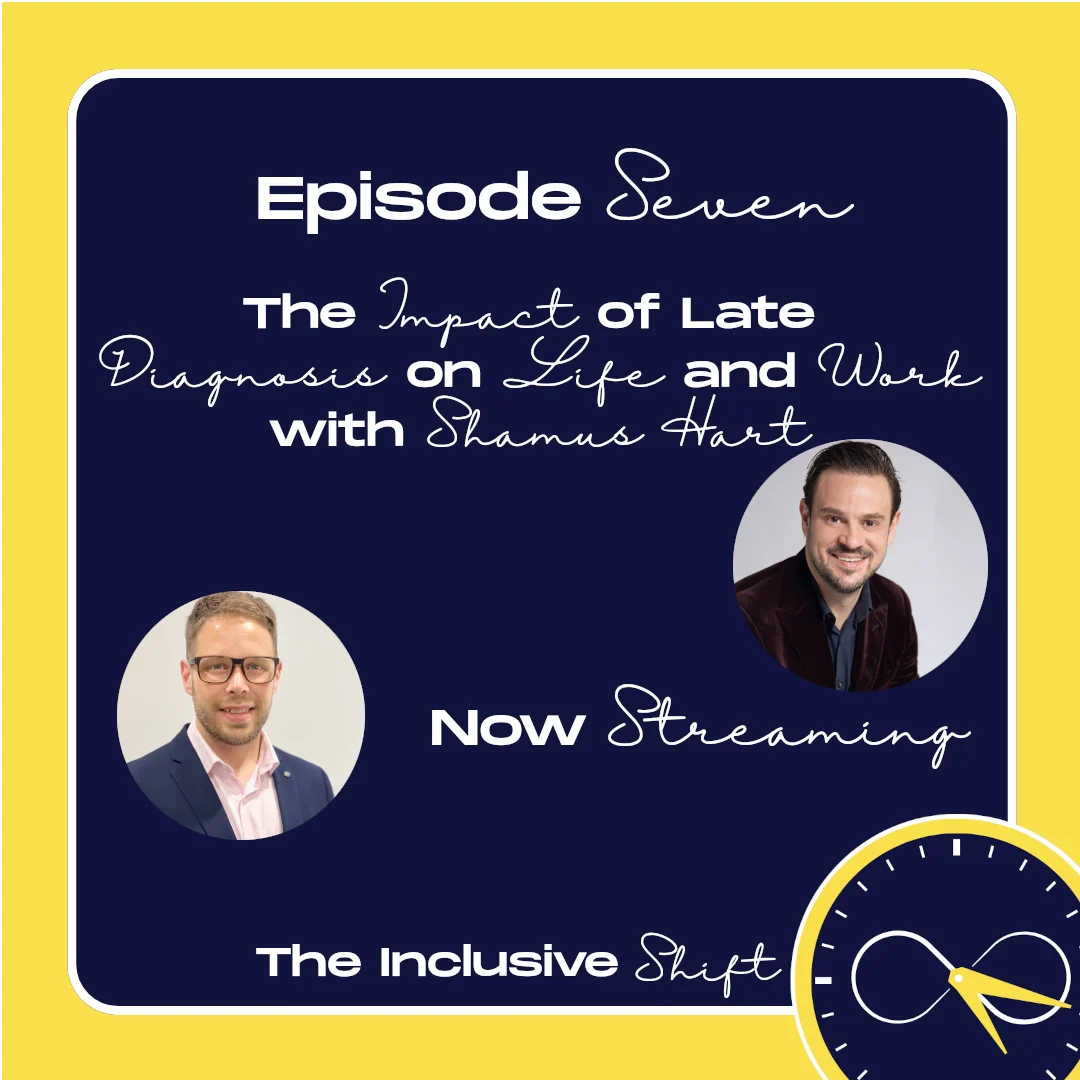
About this episode
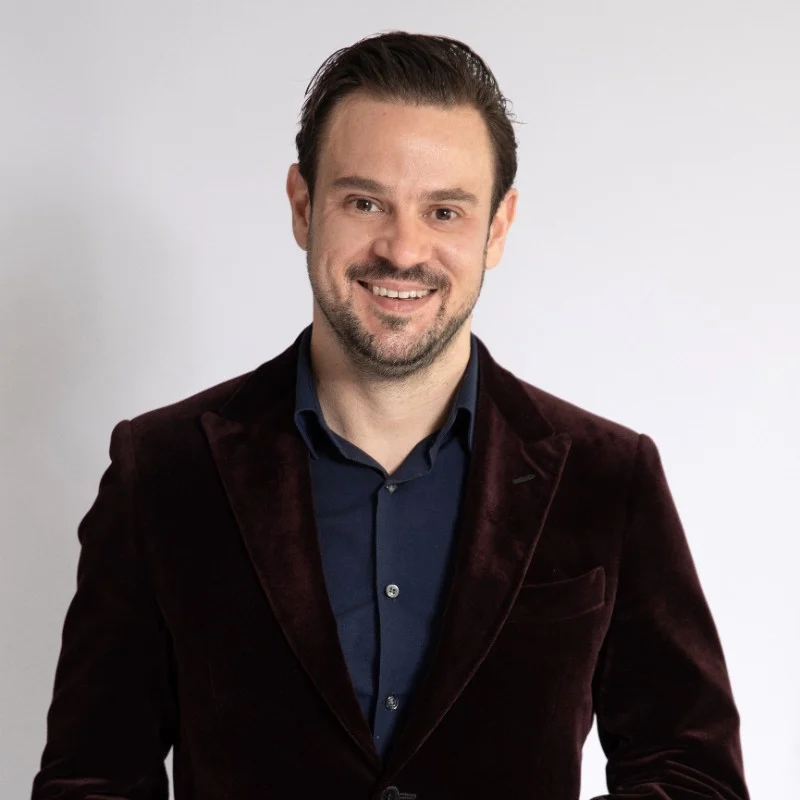
Shamus Hart, a neurodiversity consultant diagnosed in adulthood with ASD (Level 2) and ADHD, discusses running in "hard mode" with Nic. He reframes workplace accommodations like noise-cancelling headphones, written norms, and chronotype flexibility, as vital business tools for retention.
Resources mentioned
- TOOLGoblin ToolsGoblin Tools is a collection of small, simple, single-task tools, mostly designed to help neurodivergent people with tasks they find overwhelming or difficult.
- TOOLGrammarlyGrammarly is an American English-language writing assistant software tool. It started as a tool to review the spelling, grammar, and tone of a piece of writing and to identify possible instances of plagiarism.
- TOOLLoop EarplugsLoop offers earplugs for diverse needs: clear music at events, focused work, travel, and restful sleep. Options include designs for parents and children, as well as adjustable noise relief. Sleep masks for complete darkness are also available. Products focus on comfort, quality, and sound protection.
Transcript
Nic (00:00)
Welcome to the Inclusive Shift, the podcast where we explore what it really takes to build workplaces that embrace neurodiversity. I'm Nic Nagtzaam, and in each episode, I sit down with neurodivergent professionals, leaders, and experts to hear their stories, challenges, and insights on creating inclusive workplaces. Today, I'm joined by Shamus Hart, a neurodiversity consultant and advocate who shares his lived experience and learnings with the world. Shamus, welcome to the Inclusive Shift.
Continues for 34 min 51 sec — read the full transcript
Shamus Hart (00:27)
Hi Nic, thanks for adding me to the roster. It sounds like really an awesome thing to be talking about.
Nic (00:34)
Absolutely. So Shamus, you've openly shared your journey being diagnosed late in life with autism and then with ADHD. I'd love for you to walk us through your journey of being diagnosed
Shamus Hart (00:46)
It's actually a pretty long journey and I think it's the same with a lot of other people who get diagnosed late in life. So originally I got an aspergers diagnosis which at the time there wasn't a lot in terms of...
interventions. I wasn't really considered at the time for ADHD or ADD because of masking factors around autism and aspergers.
it was something that I kind of put off for a while. Plus there wasn't a lot of intervention practices pre 2010. So for adults specifically, so I struggled probably for a good 10 years. I then ended up getting re-diagnosed under the DSM-5, which was ASD level one. And that allowed me to get some basic accommodations at work that I really needed just around things
in writing around some of the sensory considerations you know one of the big
doors had opened was realising that I actually can't read under fluorescent lights. So what it meant was that I missed out a whole heap of academic work at school and then ended in the workplace. could address that. Kind of went on for a couple of years and I realised I needed a little bit more support and that's where I was re-diagnosed with ASD Level 2 and with
ADHD so it was basically a bit of one of those things where huge crash and Realizing that actually I'm a lot lower functioning than I thought I was And that was due to masking and also not being able to kind of separate the out the autism from the ADHD Which is kind of really common, you address one thing and the other bubbles to the top and I've heard a lot of
late in life diagnosed, they get, let's say an ADHD diagnosis, they get medicated and they also realize that they've got autism or some other neurodivergent condition attached to the ADHD. So I don't think it's like a clear cut thing. And I also think now it's a lot better for a lot of professionals because
that the science has effectively is catching up to a point where a lot more individuals are being picked, if that makes sense.
Nic (02:52)
Yeah, no
it does. And you're right, I think they've coined it, what, the lost generation, where most of us, because we didn't fit within the existing DSM criteria when it was originally designed, now that the DSM-5 and the updates to the DSM-5 have come out, we're now bubbling up to the surface and being diagnosed with, be it ASD or ADHD as well.
More recently on LinkedIn, you've described the grief cycle after being diagnosed with ADHD. Can you tell us a little bit more about how that felt for you?
Shamus Hart (03:24)
It's an interesting thing because a lot of late in life diagnosed people like me, what they realize is that they've effectively been running in hard mode for a very long time. So if you're a 90s kid, I got this great game in, would have been...
when I was in high school called Battletoads hardest game you can possibly play and that's kind of like a lot of neurodivergent people is they get the games that are played that are way too hard and discovering why it's so hard it unlocks so many doors so for me originally when I was diagnosed it made a lot of sense so things like
why the constant fatigue, the crash cycles, the things that I couldn't do, it was effectively a key that explained why things were, like there were barriers and they were so hard. So things like,
just being exhausted for seemingly normal things or going through these cycles. It's like when you get that ADHD diagnosis, it's very validating. Even with an autism diagnosis, it's very much the same thing, that it actually explains your wiring. Although I have to say like being diagnosed with both very different with...
With autism it was very much because you can't really medicate it like from a medical lens. It's one of those things that's very validating where it's like, okay, so yeah, that makes sense. With ADHD, it's very different is that I never really thought I'd.
Be ADHD, I just thought it was like autism and that's it. What I found is that A, it unlocked a lot of the reasons why I am the way I am.
which was great because it validated, with fatigue it's like, well, you're just not being able to do stuff. Or from a good example is I spent probably good five to six years working out why my cortisol was all over the place and ADHD kind of explained that. So you go through that and you're like, yeah, I've got the, that explains it. And then you get kind of the grief hit out because what you realize is that like,
Being me being in my 40s. I'm like I've gone Effectively 40 years without any medication for ADHD where I've absolutely needed it Which means I've just missed out on a whole heap of like a lifetime of opportunities that I probably won't ever be able to to get back So there is a bit of that and the bargaining
around it and then finally kind of you come around to it but it's it's for me the the autism and the ADHD diagnosis very very different and I would probably say the biggest one was the the the ADHD because I think at school that
medication would have made a massive difference for me, especially about the concentration and the jumping onto different things and whether the autism side, it's more structural things and environmental, which are really easy like.
taking around a whole heap of the noise cancelling headphones like at the shops or at school or at work. mean that's probably the easiest thing where ADHD, very different ones. But it's still, you go through a very specific cycle on it.
Nic (06:39)
Yeah, I too carry a set of the loop earplugs with me almost everywhere, especially when I go back into the office because after working from home for four years, going to an office, it's so distracting. And I'm just like, nope, earplugs in.
Shamus Hart (06:53)
Yeah, I've got a pair of the Audio Technica ones and they're awesome. So I just like connect them up to a few devices and they're just an absolute lifesaver.
Nic (07:03)
was
there a moment that it kind of all really clicked and you began to see yourself differently?
Shamus Hart (07:08)
can take that from two very different points. with my autism and Asperger's diagnosis, so I've had three of those diagnosed. So 2007, 2017 and then 2022.
For me it was validation of kind of what I already knew. So like I always kind of knew that I didn't fit into certain kind of social molds which made a lot of sense. And I was kind of aware of the sensory things but I couldn't quite articulate it.
That really gave me the language and the structure of why I can't read under fluorescent lights or why certain sounds actually trigger a physical response. The one that was really surprising for me was ADHD and it was my partner who actually kind of said, I think he might be...
ADHD and what I'm finding that that was the real shock getting a diagnosis for that because I also noticed that
I'm very on and very off, is probably the best. It's like I'm a 10 or a zero. There's nothing in between. That kind of explained that and it also explained a lot of the physical stuff that I've been looking at from other medical perspectives and couldn't quite nail down. For that, it was a little bit different because...
with ADHD, commonly you can, can medicated and it's like, it was a little bit more upsetting from the point of view. It's like, well, if I was in high school and I was on, let's say Ritalin that would have made a huge difference to me being able to actually finish school properly. And I'm, and it's part of the reason why I'm catching up for it now. So,
it's one of those things about with ADHD, it's more about why it's hard and all these kind of little missed out bits and why you're wiring is the way it is. Yeah, that's probably the biggest insight I could take from it.
Nic (09:01)
So you've said that it would have made a huge difference if you were in high school. If you take a look back now, what do you wish someone had said earlier in life to you?
Shamus Hart (09:13)
well, I think this is probably common for anyone who's ADHD or autistic. The big thing for me is that I had from high school just drummed into me that I was lazy and stupid and the things that were bothering me didn't really matter.
younger me would have really liked to have known that actually the sounds behind me i can't function so
a well-meaning teacher moving me to the front of the classroom. So worst thing to do because I've now got all the sound and the distraction behind me. Also, the other reason is that, I've got terrible handwriting and it would have been great to have some supports there. So I couldn't keep up with a lot of the note taking in high school. The other one was um 90s baby here in high school. Everything's fluorescent.
light so I wasn't taking much attention because I could see the flicker with a lot of the light so I couldn't actually read anything. So I probably lost probably at least like five years of school there just not being able to...
pay attention or really focus in classroom it was a bit from the ADHD bucket and a bit from the autism bucket.
Nic (10:22)
I can definitely relate. I recently went back and started to review my transcripts from high school, just to see how they were worded and there was lots of needs to apply himself better or... and I'm just like, okay, I get it.
Shamus Hart (10:39)
that was mine. That was the stuff that was in mine. I even had a well-meaning English teacher basically turn around to me and goes, don't go to uni and don't do a degree. You're not smart enough and you just can't do it. I really felt like sending them the transcript from one of my degrees. And again, it's one of those things where...
you get that on a daily basis. I was reading somewhere autistic students get far more negative comments than neurotypical students so it's no wonder a lot of us we get out of high school and we've got absolutely no confidence.
Nic (11:16)
Yep,
yeah. So if we take a bit of a step forward then and jump into the workforce, I noticed more recently or that you on LinkedIn as well that you have publicly announced to be at your workplace accommodations,
Not something that most people would feel psychologically safe to do. what led you to make that choice?
Shamus Hart (11:35)
I guess the point is that, I'm a contractor so I burn out of places really fast. Part of it's neurotype is that it's like I get to the end of it and it's like I can't physically do that job anymore.
And really I've kind of come to the conclusion if I don't talk about it, well, who else is going to? And a lot of the accommodations are really simple things. So for instance, like if you, well, any neurodivergent person, they're gonna have sensory problems. So it's like the cheapest accommodation you can put in there. And this is...
quite a fair bit of peer-reviewed literature reinforces this, like headphones, noise-canceling headphones, cheapest thing you can do. The other one as well, which is a no-cost, is flexible working, like ways of working. So for instance, ADHD minds have a delayed circadian rhythm.
which means that we tend to be more active at night and later in the afternoon when not morning people. And there's a whole heap of reasons around dopamine and cortisol levels and we usually,
wake up and our dopamine's completely depleted and our actual circadian rhythms are actually delayed, so we're better for later in the day. So easiest thing you can do, flexible work, let them work to their chronotype. Other things as well, know, put things in writing. ADHD mind, like if someone gives me verbal instructions,
I'm not gonna remember it. That's another big one, in meetings. So a lot of people, a lot of neurodivergent individuals will fidget on meetings and it's for a whole heap of different reasons, from stimming to actually concentrating. I remember a lecturer saying to me, a kind of a really good, and it really stuck is,
if an ADHD person isn't fidgeting, it means they're not listening. It's because they're using all of their effort to actually go, don't move, don't move, don't move. And it's like, you can accommodate that really cheaply and easily by just saying, well, if someone wants to turn off the camera, turn off the camera. It doesn't really hurt anyone. They're still involved with it. But yeah, I just came to the conclusion that if I wasn't talking about it, who will?
Nic (13:45)
it's beautiful. How do people respond with that level of transparency, be it colleagues or leaders?
Shamus Hart (13:50)
It's really funny, it's one of those things that's actually led me to a lot of different places for advocacy. if I didn't start talking about it, I wouldn't have done a whole heap of talks at work and I wouldn't have ended up on SBS Insight. It's not one of those things that I intended to go like that, but I found probably two key learnings that
For me, going into an organisation and being able to talk about it, there's a level of psychological safety in there and that's probably a good place for me to work. People who are shut off from it fairly quickly.
If I'm talking about it and they're not interested, well, I don't really want to work with them. So from the point of view, it's a bit of a benefit of actually being able to align myself to the right businesses who are going to give me the tools that I need to work. um
Yeah, I don't really see it as a negative. I just see it as me grading it down. And I think also there's a lot more focus on neurodivergency and specialized thinking within the workplace. So it's kind of a little bit of a connection there.
Nic (14:53)
Okay, so if we have a bit of a look then on what good supports look like in a workplace, what would they be from your perspective? I know that they're going to be completely different depending on the individual, but there's always, generally a series of shared accommodations that we can apply or help with a series of individuals, right?
Shamus Hart (15:13)
Oh, you're
absolutely spot on. I think the way that a lot of people look at accommodations are special treatment when they're not that. Think of it like this. It's a business tool.
if you're giving someone, dual monitors as a programmer, it's like there's a very specific purpose for it. If you're giving, let's say, a designer a Mac, it's a business tool. Acommodations are exactly the same thing.
The easiest ones are usually the best starting point and it at least opens the conversation for people to then go a little bit deeper and do more individualized support. the easiest ones are noise canceling headphones are a no brainer in an open planned office. Number two is put things in writing. And I mean, that's just good management. It makes things understandable, trackable,
people know where things are so it lowers a lot of the communications differences without going into the double empathy problem it just reduces all of those different problems.
The other one as well, flexible work. It's like, especially in digital, like, you're shooting yourself in the foot if you don't have flexible work, because you can also get people to cover different time zones based upon their chronotype. So it's huge business benefit. It means that you're not just locked to nine to five. Also, the other thing is office space. Like if you're doing flexible, you're not paying as much for as many seats.
The other things as well as just like putting in talks, getting people into actually an awareness piece on different neurodivergency types and you know the same thing that we do with a lot of the cultural
and LGBTQ things that go around the offices, know, they're hugely beneficial for communicating, needs and where people may fit. Because I mean, statistically with neurodivergency, it's like one in seven are going to be neurodivergent. And it's like...
when people say, they don't have any of those in their office, it's like, statistically you would have to. It's not that you bring extra ones in, they're already there. They may not even know it yet. They may not even be diagnosed. it's,
Nic (17:13)
Hmm.
Shamus Hart (17:13)
I'd say the information, information's a huge piece.
Nic (17:16)
that's
right. think what the last census said that it's 11.9 or 12 percent roughly that are within the workforce. However, obviously there's significantly more that are unemployed. I think it's around 38. Was it 38 percent that are unemployed or something like that?
Shamus Hart (17:33)
Yeah, it depends on which demographic you go down to. Yeah,
when you break it down to different neuro types. a UK study I saw four out of five autistic people are out of work. With ADHD, you tend to get a huge turnover of employment. So you'll see someone's resume with about 30 different jobs over 10 years.
It's not a cultural thing. It's usually to do with lack of support, lack of the right supports and medication or know interventions or they burn themselves out. So it's really, really super common with
women with ADHD that they'll hit perimenopausal or they'll hit 40s. And there's a ton of insights on this where they crash, they get their diagnosis and that's when they get the support. it's like, I think a lot of it, you're doing a disservice if you're not talking about it you're not supporting staff and considering it's, the science when you look at it, there's a lot more out there than they think.
If your business not jumping onto it, it's just kind of reducing the capacity of your kind of workforce.
Nic (18:37)
Yeah,
no, couldn't agree more. So on the flip side then, do you still see systems or assumptions that get in the way of providing those accommodations to people?
Shamus Hart (18:45)
All the time I think the biggest one is probably politics. So the perception I've got from places that some of it's like, oh, accommodation at special treatment. There's others that just kind of don't see the need for it. And then there's others who are just...
it's a very old management style. It's not that they're...
morally or ethically good or bad or against it. It's just how the company culture runs and I think it would be a huge generational shift to shift that mindset. And there are some businesses where you can't do that for a whole heap of different reasons and it's not saying that they're bad companies, it's just how they operate. they're a certain class of product where they just...
they're looking for a certain culture that may or may not align to neurodivergent values. And it goes across all of them. think, you could probably look into a couple of studies on that, which support that very fairly well.
Nic (19:42)
Absolutely. So being diagnosed so late in life then, have you really had an experience with unmasking and how that's how has that really impacted both you personally and professionally?
Shamus Hart (19:54)
that's, that's actually a really, really deep question. Masking from an employer point of view, what they will see is that through mental health, mental health burnout and what they think is a performance issue. it's, it's not, it's just someone's given everything they can and they've just fallen apart. They just don't have the right
supports in place. From a masking point of view, and this is probably me going through a little bit too much philosophy over the years, I think you can bucket it into two things. You can look at the, from a Jungian archetype, you can look at this is the personas that we take to work. So everyone does this. It's not just...
autistic or you know ADHD, it's across everyone has different masks that they put on.
they usually have a value to yourself. And it's like how authentic they are. Unfortunately, if you're autistic, you just kind of have to become more of the role to actually get a lot of the acceptance I've found. There's that aspect, it's like the social roles we play, which you'd probably say are conscious. Then there's the flip side, which is the unconscious stuff.
And that's what I found the real troubling part from my perspective is that it's taken me a long time to unpack, that there was a lot of things that I was doing.
purely unconsciously, didn't even know, just like, oh, okay, didn't know I was masking. Like it's not until you actually start looking at those behaviors and then this is what comes with a lot of diagnosis. like you, it's a diagnosis in the purest sense is an existential question because you're just going, oh, here's what you are and you unpack it. So.
masking is one aspect of it, but it's also kind of the flip side is like who are you really? And that's, I think the thing that most, and it was definitely my challenge, midlife getting.
couple of diagnosis and it's like well who am I why am I doing these things are they serving me am I doing this for these reasons is it something that I'm interested in it's like I actually found out I was doing a lot of things just purely mask and that's from external expectations or that's kind of what I needed to do so yeah it was a bit of a
Yeah, bit of a long story with that.
Nic (22:09)
I really appreciate it actually. It's probably the most in-depth example I've been given about masking. And it's one that's made me have a bit of a think as well. So I do appreciate the forethought there.
Jumping a little bit more into the workplace,
Shamus Hart (22:21)
Hmm.
Nic (22:21)
Do
you feel as though workplaces are ready to start supporting individuals to unmask or do you think that we have a little bit of a way to go there?
Shamus Hart (22:31)
Ooh, that's actually a really good question. And it's something that I'm asked a lot. I think if you look from purely from a corporate point of view, unmasking is effectively risk profile. So.
it's not necessarily them saying, oh, we're going to get people to unmask. It's more the fact of what is the risk profile attached to not getting the right support. It means that there's a whole heap of people that are masking extremely well, who no one suspects they're...
they're neurodivergent and they're not getting the support they need. the biggest, and from a business point of view, they're at risk of burning them out. That's where the drive is going to come from. There's the other flip side as well from the individual and it's like, they're going to go to companies where they're going to be able to support their needs. And from a Maslow,
chart, you can think, well, you know, it's, you know, I get paid and roof over my head and some, but when you're getting up to the higher levels of like the meaningful work and actually getting supported through kind of meaningful accommodations, completely different thing. And I think you'll see a lot of the neurodivergent workforce congregate at certain companies because they give them everything that they need. the flexibility, there's sensory support, the chronotrophic
support the structure that they really need and that understanding but I think we're just kind of at the renaissance of that now so it's like it's really kicking off.
Nic (23:59)
Yeah, no, I think you're right. There's probably a bit of a ways to go. I also think that line managers or any people manager should be trained in psychological safety or psychological first aid.
Shamus Hart (24:11)
100 %
100 % I think that's I've stated that quite a few times is that if you're
managing someone who's neurodivergent, you need training in it. like I'm completing a grad certificate in autism studies and looking at maybe doing the masters. And what's really shocked to me is that I've got a lot of the lived experience over 40 plus years, but like there was so much I did not know about.
the processes and the structures and the type of supports that you actually need to put in to support those people. like, I think you're a hundred percent on the money with that. They need to be trained.
Nic (24:47)
I guess the question becomes are organisations willing to train their line managers in psychological safety or for psychological first aid, right?
Shamus Hart (24:55)
Yeah, exactly.
Nic (24:56)
It's a big fork out but I think at the same time it has a huge benefit and a huge value.
Shamus Hart (25:01)
Yeah, I think you are right and I still think it falls down to risk mitigation. I think it will be one of those things where they'll work out how much it would cost them in liability.
and they'll place that on well actually no if we put this in there we're getting a better net outcome plus it completely obliterates the risk profile on having untrained people managing people with very specific needs.
Nic (25:27)
So what does advocacy look like for you now? how does your approach to communicating your needs change over that as well?
Shamus Hart (25:36)
That's a really good question. Originally, I kind of went out there because I needed some very specific needs. I'm just putting on the selfish hat for a second. So I needed some needs and support in a company.
ended up having to get another diagnosis and getting a psychologist to go all these things, which weren't like huge asks. And I guess I kind of flipped from that and then realized that there was actually quite a lot of other people who were pre-diagnosis.
diagnosed or completely like hidden with it that needed exactly the same things. And when I started talking about it, the really good companies had jumped onto it and supported it. And there were quite a few that said, do a talk about it. And I've even had times where I've at one place, I did a huge hour long talk for autism awareness month and it was yeah, absolutely huge. And I had some
senior leader come over to me after and say you've just explained my childhood where do I get a diagnosis so I don't think it's
I think it's kind of shifted to more that they are just realizing like how many people are out there who don't know where to actually go to get the validation. And I mean, it's as simple as going to the GP and saying, I think I'm these things get me to a, a psychologist or even doing pre-screening ones. There's a lot of information online that's extremely
well tested and a valid measure that will at least, it won't give you a formal diagnosis, but it will kind of give you a little bit of information to go to a professional and say, well, these are the things that I do and this kind of where it aligns. So it's giving you a bit of a better understanding than just going in there and going, I think I'm this and kind of getting talked out of it, which does happen.
Nic (27:23)
Yeah, it definitely does. I guess the challenge at the moment, at least here in Australia, is that the wait times to be diagnosed can be six to 12 months just to get in to see a psychologist nowadays. I guess that's stemmed probably more from COVID, right? And people becoming more aware of themselves and the mental health crisis that came post-COVID as well.
Shamus Hart (27:44)
Absolutely, I think you've hit it on the head as well and I think if anything what COVID did was a lot of people in isolation actually got thinking of who they are and what they wanted to do like from a whole heap of different levels and I think there's a lot of people who actually
kind of realised that they might be neurodivergent or they didn't realise a lot of the challenges that they actually had at work were, had a biological or neurophysiological reason for it. And I think it's just kind of gone from there. I think it's an unintended output of work from home.
Nic (28:16)
I agree.
So for someone then that's listening and that might be going through this current rollercoaster of emotion, what would you say to them?
Shamus Hart (28:23)
would say probably the best thing is to eliminate the doubt. If you can't afford, because as we've said, it's extremely hard and expensive to get a lot of those medical diagnosis.
reach out to the community. For instance, it's like, it's one of the best sources of information and tips and tricks where to go to. mean, it's how I ended up meeting my partner through, Autism Awareness Australia. So there's a lot of support within there and a lot of them are more than happy to say, well, this is how my process went. This is kind of where I actually moved on to and...
did what I needed to to get the you know the support I needed and validation and there's others who kind of meet up with the groups and they go yeah that's a hundred percent me and then what they get doesn't necessarily need a formal diagnosis because they're just needing like some really good hacks for it
or the other one that I've noticed post COVID is parents of neurodivergent children just realising actually that was me at the same age. And then just kind of learning a lot of the hacks and the tricks of what the kids treatment is. They're like, wow, the sensory thing made sense or the light thing made sense.
Yeah, I don't think there's just one path to go. think, self identifying is more than valid, especially when you look at the barriers for getting those pieces of paper to say that you're autistic or ADHD. But I think it also varies very heavily on each person.
Nic (29:53)
Yeah, no, I couldn't agree more. I think self-identification and doing those self-assessments is a great way to help you get a better understanding of yourself, at least initially, before going down. If you do then choose to go down that formal diagnosis path, at least you have a base level of understanding and information with you to start that journey.
Shamus Hart (30:12)
I think that's really well said.
Nic (30:14)
So turning the tables then, do you have any questions for me?
Shamus Hart (30:16)
I guess probably the big one is you've spoken to a lot of people on these types of subjects. What are probably the top insights that you've found? Because there's probably a lot of things that you've just kind of like talking with people, connecting, you've just found something. So yeah, so what is it?
Nic (30:35)
I think it's dependent on the diagnosis and the environment that they work in, right? So I recently sat down with a long-term friend of mine who's dyslexic and had a conversation with him about his diagnosis and the accommodations that he needs in his workplace. And that obviously would vary depending on your type of dyslexia, whether it's dyscalculator or dyslexia, right?
But for him, leveraging things like Grammarly to help him with his grammar and spelling and things like that. Or leveraging a calculator or your phone or ChatGTP to help with answering wording different responses to people. Alternatively, if we go down the path of ADHD or autism...
The flexible working times has been a key one there. The ability to flexi-work, so be it work from home, work from the office, depending on how you thrive. There are obviously those that thrive better at home. There are those that love being in the office and love being in that open environment. I personally would much rather be at home where it's quiet and less chaotic.
I think we've recently at work gone through and implemented the Amaze Reset Rooms as well and they have been quite good. People have really approached them and said that they're amazing. Be it execs, directors and people on the floor, they've all had an opportunity to kind of...
take a pause, reset themselves, re-regulate themselves and then come back into the workforce. So I'm really glad to see tools like that are helping within the workplace as opposed to just looking at, small accommodations that everyone should have anyway, which is things like the noise cancelling headphones or the ability to work in a quiet room with no fluorescent lights, just the ability to dim the lights and just get your work done.
Shamus Hart (32:20)
know that that makes a lot of sense and it's like yeah I mean you mentioned a couple of really good ones and yeah I can't live without Grammarly and I use ChatGPT a lot it just means that I can chuck a whole heap of things in there and it makes a list of what I need to do. The other one as well which I thought you were just about to hint on was Goblin Tools.
Nic (32:42)
I haven't
heard of goblin tools to be honest.
Shamus Hart (32:43)
It's great. had a dyslexic friend actually put me across to it and it just breaks down complex tasks into manageable things.
Nic (32:56)
Hmm.
Shamus Hart (32:57)
big one for me, I'm overwhelmed all the time. So if I whack it in there, it just goes, this is what you've got to do. And it's like, okay, more manageable.
Nic (33:05)
That's awesome. I am going to check that out I'm really interested to see how that would work.
Shamus Hart (33:10)
yeah, it's a really cool tool. I forget who it was again. Yeah, that helped them with some challenges around dyslexia and yeah, they're like, yeah, maybe you need to use this and it's, yeah, I've just used it all the time. It's great. And then, yeah, also the other one as well.
Grammarly, one of the big things for UX, for any UX designers out there is the ability to switch from passive to active voice. lot easier to read and understand and it's one of the things where we tend to write in passive which is a little bit...
more verbose, yeah, passive is like way more accessible and it's like it's the smallest thing.
Nic (33:50)
Yeah,
that's right. And if it's a $250 tool and it's going to give you such a great outcome, it's
Shamus Hart (33:57)
Yeah.
Nic (33:58)
very inexpensive to make someone's life so much easier.
Shamus Hart (34:00)
Yeah, one of the best tools so far.
Nic (34:02)
Awesome. So before we wrap up then, is there anything else that you'd love to leave our listeners?
Shamus Hart (34:07)
Ooh, that's a good one. God, I spoke about so much. I'd probably say your your best way of accommodating other neurodivergent employees is literally with your time. You know, that's the difference. And, just understanding the perspective. Like that makes a huge, huge difference.
And if there's things that don't make sense to why they're doing, there's probably a very, very good reason. And it's like it just comes from, just connecting with someone.
Nic (34:37)
Awesome. Well, Shamus, thank you very much for your time. I really appreciate it.
Shamus Hart (34:40)
thank you so much for having me on. I've really enjoyed it. I've picked up a few new things.