About this episode
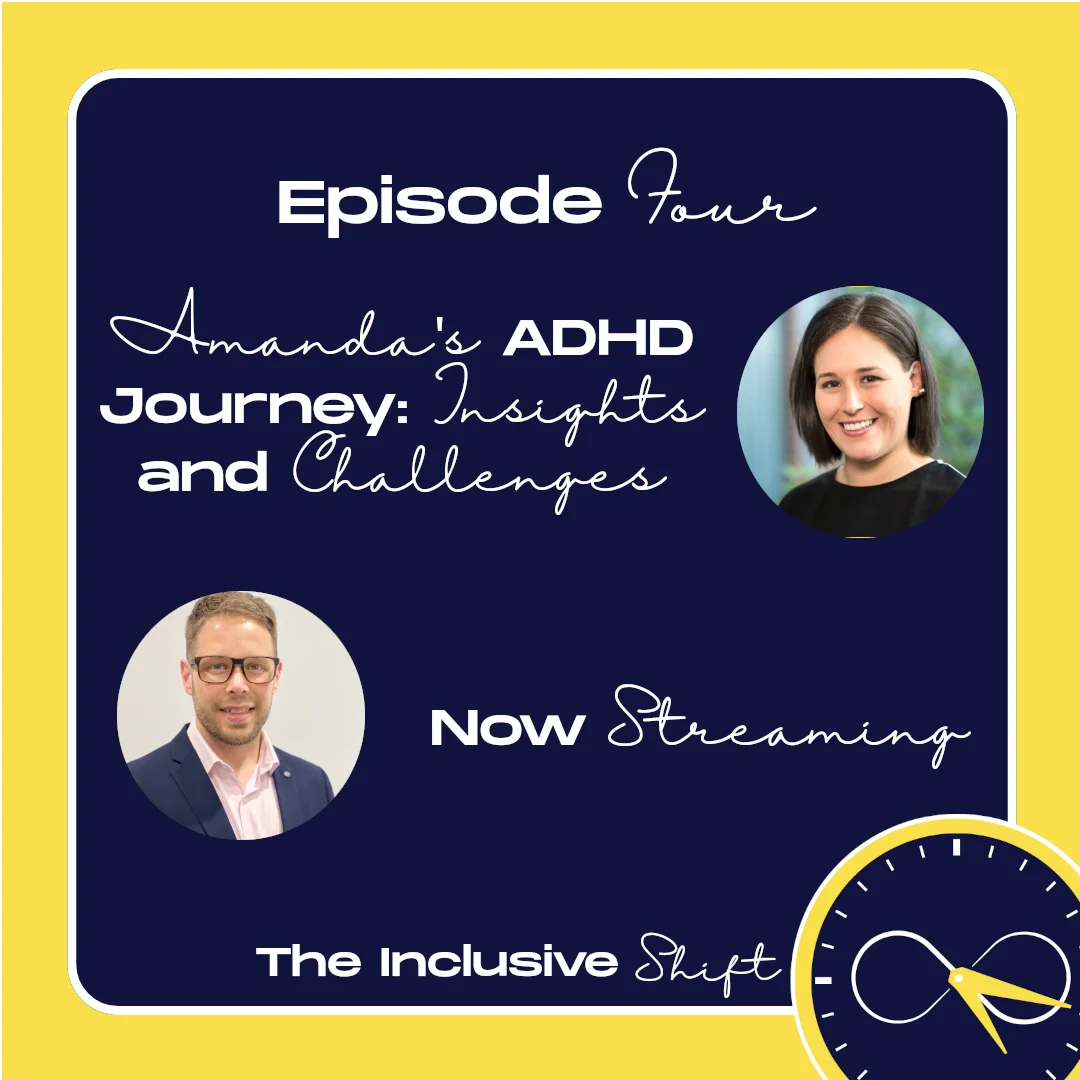
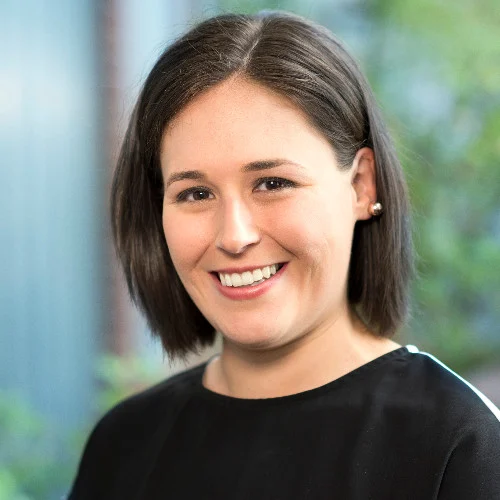
Amanda, a spatial scientist diagnosed with inattentive ADHD at 35, shares her journey from feeling average to gaining self-clarity. She explores task paralysis and rejection sensitivity with Nic, emphasising the vital role of clear written communication, flexibility, and psychological safety.
Resources mentioned
- TOOLNotebookLM (Gemani Notebook)The AI research tool and thinking partner that can analyse your sources, turn complexity into clarity and transform your content.
- ORGANISATIONShift 20 InitiativeThe Shift 20 Initiative is a coalition of the nation’s top brands working towards increased disability representation, inclusion and accessibility in marketing and communications.
- TOOLSpeechifyTurn Any Text Into Audio With Speechify's #1 AI Text-to-Speech App. For Children & Adults. Listen and Learn Without Limits.
Transcript
Nic (00:00)
Welcome to the Inclusive Shift, the podcast where we explore what it really takes to build workplaces that embrace neurodiversity. I'm Nic Nagtzaam and in each episode, I sit down with neurodivergent professionals, leaders and experts to hear their stories, challenges and insights on creating inclusive workplaces. My guest today is Amanda, a spatial scientist and book nerd. Her words, not mine. Welcome Amanda.
Continues for 32 min 7 sec — read the full transcript
Amanda (00:22)
Thanks
for having me Nic.
Nic (00:23)
Amanda, outside work, what lights you up and keeps you grounded?
Amanda (00:27)
That's a really good question. I am not typically someone that has a lot of hobbies. So I'm inattentive ADHD and I find it hard to keep focus on building hobbies around activities, but definitely vibe off social interactions. So that's probably like spending time with my daughter and spending time with my family and friends is probably the thing that gives me the most joy.
in life and when I spend my spare time and then on the flip side of that when my brain turns into a potato of a certain time of evening, I like to bury myself and disassociate by reading books.
Nic (01:03)
Awesome. So you described yourself as a book nerd. What drew you to those words?
Amanda (01:09)
Yeah, I mean, I've always used reading as an escape even prior to diagnosis. I find that it really calms my mind. So I am able to put myself in a story or in a book and tune out the world around me. So when I find that I'm getting overwhelmed with...
what's on my task list to do tomorrow or trying to get to sleep of an evening by picking up a book and immersing myself in the world or, relating to characters that are so different to myself or the people around me. I find that is a really good escape and I will basically, pick up and read just about anything.
if it's available.
Nic (01:57)
Is there a specific preference of genre or just anything in general?
Amanda (02:02)
Yeah, I mean, it depends on how much life I've got going on. The more life I've got going on, the easier I like to read. If I've got a bit more downtime and a bit more brain capacity, I'll get into something heavier. I guess the chosen genre at the moment is probably fantasy or romance fantasy. So, things that are nice, quick, easy reads.
reasonably predictable storylines, characters that are easily relatable. So that's kind of my brain turn off switch. And then for times when I've got a bit more thinking, I'll usually go based on recommendations from friends. So, fiction, nonfiction, never really been a biography fan, but yeah, I'd say that.
Yeah, fantasy is usually my go-to genre.
Nic (02:47)
Awesome. So you were diagnosed late with inattentive ADHD. How did that come about?
Amanda (02:52)
So funnily enough, was starting the conversation with our maternal health nurse when my daughter was about three and a half, recognizing that my husband is also ADHD and at that stage he was undiagnosed ADHD. And we were asking questions about her development and what we needed to look out for.
what kind of things we needed to kind of flag when she was starting to go to kinder and go to school and trying to be at the forefront of making sure she had the tools that she would need to kind of thrive in those environments. And so as a result of that, I did a little bit of research and started, sending reels and things like this to my husband of
the ADHD habit of doing this thing and doing that thing and sending them to him, kind of laughing and saying, oh, you know, you do this thing, you do this thing. And then as I kind of read more and did more research on it, I was like, oh my goodness, I actually do those things too. It had never really occurred to me that I was neurodivergent because I was not what I perceived as.
the definition of ADHD. I like, wasn't a naughty little kid that was always getting in trouble or disrupting class or anything like that. And so it was quite a shock to me at, 30, what was I, 35 at the time, that that was something that was possible. So I just kind of had gone to my psychologist and I battled with depression and anxiety for
quite a large portion of my life since my early teens. And at one stage, thought I was bipolar because my moods were so erratic. And so I was like, I went to her and I was like, this is probably one of those things where I think I have this thing, but I probably don't. But can you test me for it anyway, just for peace of mind? And, lo and behold, it came back with like 99.
percentile inattentive ADHD. yeah, was a quite a quick kind of progress from going to not even suspecting I was neurodivergent to finding out that and being diagnosed that with ADHD. And, that also then coincided with the beginning of my MBA, which was, I guess it was good timing because
It gave me the opportunity to kind of work out better ways for me to work in an academic setting, which was something that I'd always traditionally struggled with. So yeah, it was really kind of interesting timing. And I'm kind of glad that it came up when it did because I've been able to make the most of my study opportunities since then because I can better understand how my brain works.
Nic (05:30)
Yeah, absolutely.
So looking back, how has your diagnosis changed how you see your earlier life experiences?
Amanda (05:37)
Yeah, I found it really validating. I had always thought that the reason why I struggled at school or in academic settings was because I was just dumb. And I like I thought it was a reflection on my intelligence. And so I'd kind of gone through school.
And no matter how much I busted ass trying to get things done or how much study I did, I'd always kind of come up with mediocre grades. it actually got to the point where even up until I was diagnosed, so up until the age of 36, I just, got to this habit of calling myself medium. So I...
would often describe myself to those around me. was like, I'm the most like middle medium person you will ever meet. Like I'm not dumb, I'm not smart, I'm not this, I'm not that. I just go through the middle. And that's kind of the perception that I had of myself. And it was just that it like, that was just who I was. Like it was.
there was no kind of reason for that. I was just an average person. I was the most average person that I knew. And then I guess finding out that the reason why I wasn't successful trying to do the same things and using the same techniques that all my peers were using, know, socially, academically, emotionally.
to have a reason what like, because my brain wasn't right that way. Like it wasn't anything that I did wrong. It was just that I just wasn't built that way. so yeah, I did find that really validating and it really gave me the opportunity to kind of step back and think about, what
I'd
actually done and what I'd achieved and how far I'd come from, particularly engaging in just like when I was younger, engaging in destructive behaviors and things like that and things that I would have done in social situations that, made me a bit weird to other people. And what
of was like the root cause of that and I'm certainly not using it as a a justification for any past bad behavior but at least it gave me a better understanding of why I was doing those things. Yeah it was
Nic (07:55)
the clarity.
Amanda (07:56)
yeah that's right it gave clarity around it yeah yeah.
Nic (07:59)
Yeah, I can definitely appreciate that one. So let's jump into the workplace a little bit. You've mentioned, it that you struggle with task paralysis and RSD. How
does that show up for you in your work?
Amanda (08:12)
Yeah, the task paralysis has definitely affected me in my work over the years. And for the most part, it's the type of thing that happens when, you've got that little niggling task in the background and you know it'll take you five minutes to do, but it sits on your to-do list for a million years because no one's really pushing you to get it done.
particularly like working in a consulting environment where everything's really deadline driven. So, in, in some senses, I actually thrive, because we've got short deadlines, the tasks are, a quick turnaround, relatively straightforward. but it's those are kind of background ones that linger that don't have those deadlines that I really struggle to complete. and I know that,
previously, particularly when, I'm emotionally and personally drained or I'm starting towards burnout, it gets more pronounced. And I know that it's frustrated my colleagues over the years. I've gotten a lot better at managing managing it. I've got lists for days to kind of manage manage my task load and make sure that, I've got everything.
prioritise and whatever and I've tried every single tool under the sun and I've tried time blocking and I've tried this and I've tried that and none of it's really seemed to work. But yeah, I mean, it's certainly, I guess, putting some of my colleagues offside earlier on when they didn't quite understand why I just wasn't doing the thing. And it wasn't that I wasn't doing
anything, it was just, was doing everything but that thing because it required more brain capacity than I had at the time. Or I wasn't getting pushed to complete it because there was no tight deadline and newer, more urgent things kept landing on my plate. So yeah, I've really found that a struggle to keep on top of again, in this kind of environment where those types of things do tend to fly under the radar.
and can very quickly cause project budget blowouts and timeline blowouts and things like that.
Nic (10:04)
you've been called the go-to girl, right? So,
Amanda (10:07)
Mm.
Nic (10:07)
can you tell us the story behind that?
Amanda (10:09)
Yeah, so I guess this is where the rejection sensitivity comes into it. So, and you know what, I'd be surprised if there wasn't a person like this in every office environment that, someone has, that people have worked in, but I kind of, I put the value on myself as a person by the volume of things.
that I did. So I was quite often finding myself agreeing to doing tasks outside of what my job description or what my scope were doing, like what my scope was. And so instead of, I guess, kind of, I'm not talking about sitting down and going, well, no, that's not my job. So I'm not going to do it. It was volunteering for...
basically everything so that I could be perceived as being useful and valuable. and so it got to the point where I was so overloaded with tasks. Like, so this is, for example, it like, I'm a spatial scientist by trade. I'm hired as a professional consultant to do mapping and GIS work. So I found myself being the office manager. found myself doing HR tasks.
I found myself doing financial tasks, like things that were well and truly outside the remit of my professional job description, because the task needed to be done. There was no one else that I perceived that could do it. And I wanted to show that I added value and I wanted to show, I guess that I was capable and that was how I did it.
The catch in that is that once you become the go-to girl, people take that for granted and they continue to ask you to do these things, whether you step into those roles temporarily, they kind of tend to stick and become permanent, which then just adds to the workload. adds to the burnout. It adds to the list of tasks that continue to get longer because you don't have the brain capacity to deal with it. And so that kind of inability.
to
say no, that, need to have people find value in keeping me around was actually like really harmful to, my work life and my mental health, because I was just saying yes to everything. And it took a lot of work, to A, learn how to say no and B, get my colleagues to understand that,
It's okay to hear no. specifically when, they weren't used to hearing no from me. So it was a bit of a shock, I think, when I started turning around and saying no to doing things and then, lo and behold, the world didn't fall apart when I started saying no. It was like, okay, well, you know, do it when you can, or is it, okay, I'll see if so-and-so can do it instead. Like it wasn't.
the end of the world like I perceived it would be if I started doing it. Started saying no much sooner than I did.
Nic (13:00)
that comes down to guess communication right so it's being able to set a series of clear boundaries for what you want to do and how you're going to be able to support your colleagues while you continue to do your work. So what does good communication then look like for you?
Amanda (13:20)
Yeah, good communication is something that I've really tried to instill in the people that I work in projects with. So as a project manager, when I'm talking to my junior staff members or even, my project directors and stuff, sure that everything is very clear. So
I work with a bunch of engineers and scientists and they have this really great habit of explaining things in a way that they understand, but don't necessarily explain in a way that the person receiving it understands. And so I found that by making sure you're allowing space for A giving clear instructions, but then also B making sure that
you create space for people to ask questions in a safe way. So especially with working with younger staff members, I find that there's often this reluctance to ask questions when they're not sure what the instruction is or they need additional information. And that then leads to miscommunication and tasks having to be redone or not being done in a timely manner. So I guess
for me the key things to like good communication is setting those clear expectations, but also then allowing space and making it okay to ask questions if you're unsure and just reiterating that fact as much as you can until it becomes habit throughout the organization. So it does take.
time to do that and you'll always get, different personalities that don't operate that way or, neurodiversity is a, is a, is a wonderful term in that, you know, everybody thinks and communicates differently and has different life experiences and their brains operate in different ways, whether they're neurodivergent or neuro-typical and being able to understand that.
You know, you need to change your communication style based on who's receiving that information. It's not just about you understanding the instructions you're giving them. It's about them being also able to receive those instructions and making sure they're clear.
Nic (15:31)
So if leaders or co-workers could make one small shift to support people that are neurodivergent or in your case people that have been diagnosed with inattentive ADHD, what would that be?
Amanda (15:42)
Yeah, I think
it's not being afraid to have the conversation about what an employee needs to function at their best. So that can be difficult because some people aren't comfortable like sharing their diagnosis and that's completely fine. It's a personal thing. So as a leader, if you're unsure or you can see that
a team member may be struggling with, things like team communications or performing certain tasks that you are approaching them in a respectful way and giving them the opportunity to, to tell you or to let you know what support looks like for them. So I guess again, it's just reiterating that point about allowing space.
So, yeah, just making it clear that, okay, I can see that maybe you don't get along with this person particularly well, or I can see you're struggling with the functions of this task, or I can see that you're, you're struggling or I can see that, you're having trouble communicating with or communicating this particular topic or
whatever
it may be and just sitting down and being open to listen to tell me about why that might be. What does support look like for you? What can we do to make that easier? Likewise, as an employee, what I've really tried to do is let people that I'm working with know what my personal communication expectations are.
So, I'll say I quite often have colleagues interstate that will ring me with instructions, and give me verbal instructions over the phone. I can tell you now, even if I write notes, as soon as I hang up that phone, I've forgotten what they've told me to do. kind of making it habit for them. So was okay, great. It's great. I need you to list that out in an email and send it to me as well. Or I've got a colleague who's autistic ADHD and she's
doesn't like being put on the spot to answer questions. I'm trying to get her to kind of come forward and say, okay, well, it's really great that you've asked me this thing. Can I take that information away, have a little bit of a think about it and then get back to you with an answer so that there's no pressure on her to answer that question on the spot. And giving guidance and letting her know that it's okay to have those conversations.
with her project team members. Because if that's what you need to support and that's what you need to make the best of your work life, then I don't see why it should be something that is not doable or something that's hard to implement. So like we don't have any policies or anything like that outside of the normal like inclusive workplace, whatever.
in regards to working with people who are neurodivergent. But What I'm trying to do as a leader in this business is kind of solidify those communication norms just to make it like try to embed that embedded in the culture that it's okay to have those open communications, those feedback discussions.
allowing people space and giving people the opportunity to say and voice what support might look like to them, whether they're neurodivergent or neuro-typical.
Nic (18:51)
Yeah, I guess as a manager, you need to make sure that you treat everyone uniquely or individually. You can't just set a set guidelines or rules for the entire team. needs to be every individual is designed to have their own supports in place. And that might look vastly different for every individual. But the key there is that you're going to get the best out of every employee by ensuring that you're
supporting them appropriately.
Amanda (19:20)
exactly.
And it blows my mind that we as parents, when we're talking to, the people that are educating our children and when we're talking to our children and teaching them how to communicate and be respectful of others, that we're not doing that ourselves. So it's like so-and-so may be a bit different or so-and-so does it.
process things the same way you do and that's okay. Or, you know, if they, they're doing this certain behavior, it's not because they are trying to annoy you. It's because that's how they show you that they want to be friends and things like that. So I don't know why we're just not doing that for everybody. Like, why does that have to be something that we focus on teaching neurodivergent kids? Shouldn't we just be teaching all kids to
to communicate that way and to be respectful of others, know, preferences, personalities, culture, developmental skills. why is it something that, needs to be brushed under the rug and has to be a difficult conversation when a big believer in that being a
communication is the key to, to having healthy, happy relationships. And that's not just within the family unit or within, friendships or your social circles, but it's also in the work environment as well. So yeah, it just blows my mind that we're teaching our kids or neurodivergent kids how to like read these social cues that are supposedly, we're just supposed to pick up on where, we should
aren't doing that just for everybody and we're not doing that ourselves as adults. You know, it just blows my mind.
Nic (20:54)
The number of times I've had to go to my boys school and educate them on what neuroinclusivity looks like or how we should be communicating or making the entire community aware ⁓ of what neurodiversity is and how everyone thinks differently But
Amanda (21:13)
Yeah.
Nic (21:13)
I think it's important though, right? If we can't help the community become a better place,
then what are we doing?
Amanda (21:20)
It also teaches that tolerance, I guess, of difference. So it's something that, we're actively teaching our neurodivergent kids is that tolerance of difference. And we're trying to, fit them into the world, but wouldn't the world be a better place if we just taught everybody that.
Nic (21:37)
that leads me kind of to my next question then would be now if you could redesign one thing about a workplace to make it more inclusive what's it going to be?
Amanda (21:45)
Yeah, that's a really good question.
I don't know about redesign. So what do I think that workplaces do well that makes them inclusive places? I think certainly since, since the pandemic and all the lockdowns, working from having working from home as a flexible option. So when your social battery is low and you can't face going into the office and having to deal with people face to face, I think that's been a really good thing.
I think that
kind of get this like, you know, the, what is it? the social, what's the, the ESG, the acronym that's been thrown around at the moment. Like there's a tendency to kind of greenwash and, you know, kind of put all these policies in place that are designed for neurodivergent employees, but aren't necessarily considering what they,
Nic (22:28)
as in DEI strategies.
Amanda (22:30)
yeah, DEI, that's what it was. Sorry. I was like, yes, that's not right.
Yeah. So it's like, sometimes I find that a lot of that is just corporate jargon. And I sometimes you like An organization has to do it really well for it to actually transfer into meaningful cultural change. in other, aspects, like for, gender equity and, sexuality and things like that, they're doing it quite well, but.
I still think there's a lot of work to do as far as people with disabilities and people who are neurodivergent. I think, yeah, I guess it's, it's creating a culture of safety so that people can understand that they they don't have to mask when they go to work or
if they are like, I mean, there's always some level of masking for everybody when you go to work, but making sure that the support or the expectations are clear and that, people do have that option to kind of step back and take space if they need it.
Nic (23:32)
Hmm
There are some definitely some amazing organizations trying to shift that needle be it I think one I was I was made aware of today was Dylan Alcott so Dylan Alcott has created
Amanda (23:44)
Mm.
Nic (23:45)
created a foundation called the shift 20 initiative So he's trying to make it so that the the 20 % that are be it disabled or that look different or that
have an invisible disability are seen in things like advertising and in media and
Amanda (24:02)
Hmm.
Nic (24:03)
to ensure that everyone is seen for the unique individuals that they are as opposed to just the norm of the other 80 % of people.
Amanda (24:17)
Yeah.
Nic (24:17)
Which is awesome to see but you're right I think there's a lot of stuff that organizations still need to do to become holistically inclusive
Amanda (24:25)
Yeah, I guess that the uniqueness there, right, is that he's someone that fits into that 20%. So he's going to be best placed to kind of drive those initiatives as opposed to someone from the 80 % who's then trying to the latest corporate trend into their organization and think that it fixes everything.
it needs to any, any initiative or any kind of support mechanisms that put in place need to be like the people that are that 20%, they need to be included in that. Yeah. Yeah, exactly.
Nic (25:05)
Yeah, they need to help drive that change.
Amanda (25:08)
It can't just be something that you try to push onto them with no understanding. mean, I had this experience with university of Melbourne when I first found out that I was diagnosed with ADHD. So they've got their.
psych services and everything like that, that students can access for free. They did a workshop like two hour zoom thing on, ADHD and study. And it was kind of touted as a, yeah, like tools that can help people with ADHD study. And that was presented by the psych team and this and that, and I went to it and it was honestly, it was like two neuro typical psychologists.
telling me all of these tools that they'd read out of a textbook, like time blocking and exercising and diet and all of these other things that anyone with ADHD or mental health issues has tried at some point in their life to make their lives easier. And to some extent, yes, those things do work, but they weren't actually practical, helpful tools. So even things like,
Using
tools like speechify to read case study notes out to you. If you can't, if you have trouble reading large swathes of texts that you have no interest in or, using, AI tools to help summarize study notes, to make them a way that to, to, to make them more digestible for you. Or if you've got dyslexia and all of these kinds of things, like practical tools that would actually help.
rather than just being like, you need to be better at time management or you need to go out and get some fresh air and that will fix everything and you'll be fine. Like it's just, yeah, it's, it was, I just, I was so enraged after I watched that. was like, I've just wasted two hours of my life on something that you know what, and maybe there were some people that found that helpful, but a seasoned veteran of someone who's
tried every study tool, memory tool, work tool, organization tool, time management tool under the sun throughout my university and then 18 year career. was just flabbergasted that that's what they were presenting.
Nic (27:07)
No that it would have infuriated me too. I think
Amanda (27:10)
you
Nic (27:10)
the biggest game changer for me is sort of in the last, reckon, six to twelve months is
Amanda (27:15)
Mm.
Nic (27:16)
using Notebook LM.
Amanda (27:17)
Yeah, that's the one that changes the case notes and stuff to podcast format. Yeah. Like it reads like it's a podcast. Yep.
Nic (27:21)
Yeah, that's right, that's right.
It honestly has saved me so much reading time, but at the same time I can
Amanda (27:29)
Mm.
Nic (27:31)
re-listen to that podcast over the entire week before I go into class and then it's kind of ingrained in my knowledge which is phenomenal. Or
even listening to it in the car on the way to uni so that it's refreshed in my brain before I walk into class is phenomenal.
Amanda (27:47)
Yeah,
yeah, so things like that, yeah, would have been helpful.
Nic (27:52)
But, I guess there's still a level of mistrust with AI and the usage of AI in an academic setting.
You know, there's studies that are coming out at the moment that are showing that autistics are being flagged as using AI even though they may not be using AI because they actually write like an AI. I mean, there's
Amanda (28:11)
Hmm.
Nic (28:11)
an unconscious bias written into the AI checking tools.
So there's a ways to go in that space for sure.
Amanda (28:17)
I've also noticed it, since I was using chat GPT to summarize notes that I did also start writing in it like, like AI. So I've had to consciously kind of step back and stop doing that because I would write something from scratch without using assisted notes or anything, and then push it through this, zero GTP or something like that before I submit it.
And it would come back as saying that it was AI written when it was completely content that like content that I'd written from scratch. So yeah, had to kind of step back and go, okay. Maybe I, maybe I shouldn't be using that for my study notes. Maybe I need to find another way to do it that, that doesn't, monumentally change my writing style to sound like a robot.
Nic (28:57)
So turning the tables then, do you have a question for me?
Amanda (28:59)
I'd really like to know, what kind of prompted this or what your experience has been, in your organization. I mean, as a, as a parent of, if neurodivergent children, like you said earlier about how, you know, you're surprised at how many times you still have to have that conversation in school. Are you also finding that you're having to have those conversations in the workplace?
Or are you finding that, as a parent, advocating for your children is much easier than say advocating for yourself or your colleagues in your workplace?
Nic (29:27)
I think I'm very fortunate in the position that I am at my workplace, right? So at the moment for me, I am one of the co-chairs of our employee resource group for neurodiversity. I'm facilitating that conversation for change to ensure that...
we do have a voice and we are trying to make that needle shift, right? But it's, I still regularly sit in meetings and go, hey, you know.
how could we make this more inclusive? Does it need to be all cameras on, for example, because obviously a lot of people do feel that meeting fatigue by having their camera on eight hours a day, five days a week. Like it becomes too much sometimes.
So is it, you know, can we do that or can we provide people the ability to, instead of having to turn up to every single meeting, give them the ability to asynchronously provide feedback on a workshop or on a meeting via chat or via a document, you know, with comments instead of having to be in the room and having that conversation at that point in time.
It's been interesting and there is definitely a ways to go but I'm very fortunate in being able to be a part of that change which is great.
Amanda (30:44)
Yeah.
Have you had much pushback from colleagues on when you're kind of bringing that stuff up? it, are you finding that you're getting support and they're on board to fix those things or are you starting to get like, or do you find that you're just getting eye rolls and being like, really? Do we even need to bother?
Nic (31:00)
I don't get many eye rolls, which is good.
It's been pretty good, have to be honest. If we did run into issues, typically we're able to confidently sit and have a conversation. I think the challenge that I have at the moment is being the co-chair of a neurodiversity group full of people that have very busy, very fast brains, is that they want to do change immediately and
Amanda (31:23)
Mm.
Nic (31:24)
the organisation
cannot sustain the pace that a bunch of neurodivergence want to kind of do change at once. So we kind of have to...
set a level of expectation to go, we love all of your ideas and we've got a backlog and catalogue of all of them that we're continuing to grab and to collate. But we need to do this in a sustained pace to ensure that we can actually achieve change for the long term instead of the short term.
Amanda (31:51)
that's
great. That's really good.
Nic (31:53)
Well Amanda, thank you very much for your time I do appreciate it and yeah it was great having you here.
Amanda (31:59)
Yeah, thanks for the opportunity Nic, I always appreciate a platform. Thank You
Nic (32:04)
Anytime.